In the modern automotive upfitting ecosystem, the procurement of Truck Leveling Kits has evolved far beyond basic aesthetic corrections. For commercial fleet managers, municipal procurement officers, off-road equipment importers, and automotive distributors, installing a leveling system is a strategic engineering decision. Modern light-duty pickups (such as the Ford F-150, Chevrolet Silverado 1500, Ram 1500, and Toyota Tundra) as well as heavy-duty platforms (Ford Super Duty F-250/F-350, GM 2500/3500 HD, and Ram 2500/3500) are engineered from the factory with a deliberate forward rake—typically raising the rear axle by 1.5 to 3.0 inches relative to the front hub center.
While original equipment manufacturers (OEMs) implement this rake to compensate for suspension sag when carrying maximum payload or lugging heavy tongue-weight trailers, unladen commercial vehicles suffer from reduced front approach angles, compromised front ground clearance, and limitations on tire outer diameter (OD). This comprehensive procurement guide synthesizes over 40 years of hands-on installation experience from Pickup Outfitters St. Louis (established in 1984), offering global buyers actionable information gain, engineering metrics, and market forecasts for commercial truck leveling kits.
Engineering Directives at a Glance
Leveling kits modify front suspension geometry without altering rear ride height. Choosing the correct mechanical architecture—whether strut extensions, torsion keys, coil spring spacers, or adjustable dampening shocks—requires precise evaluation of CV axle angles, Upper Control Arm (UCA) ball joint articulation limits, and Advanced Driver Assistance Systems (ADAS) sensor recalibration.
1. Technical Classification & Product Recommendations
Selecting the appropriate truck leveling kit depends entirely on the front suspension layout designed by the vehicle manufacturer. Automotive platforms generally utilize one of three primary front suspension architectures: Independent Front Suspension (IFS) with Coilover Struts, IFS with Torsion Bars, or Solid Front Axle (SFA) with Coil Springs.
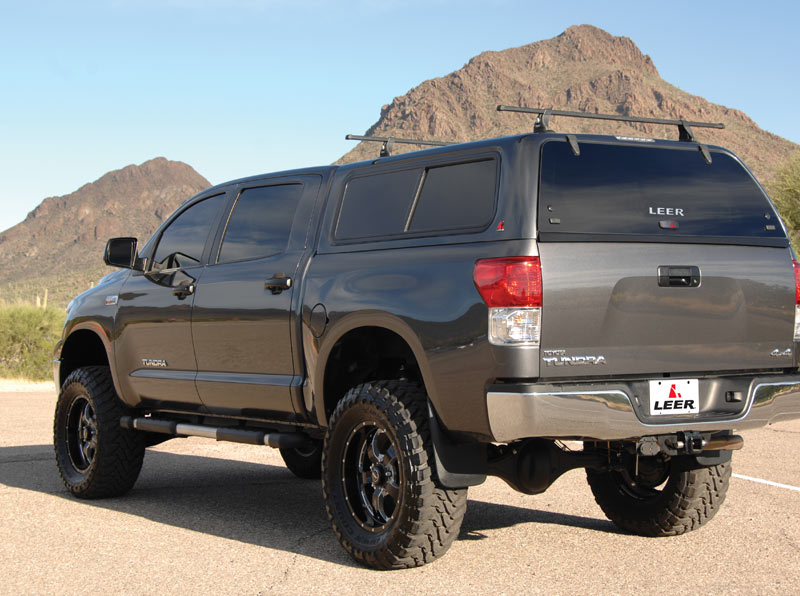
A. Strut Extension Leveling Kits (Coilover IFS Vehicles)
Designed primarily for half-ton platforms (Ford F-150 2004–Present, GM 1500 2007–Present, Toyota Tundra 2007–Present), top-mount or bottom-mount strut extensions relocate the entire factory strut assembly downward.
- Top-Mount Strut Spacers: Positioned between the upper strut hat and the vehicle frame mount. They preserve original factory coil spring rates and factory shock dampening profiles. However, procurement specialists must note that due to suspension motion ratios (typically 1:1.5 to 1:1.8 on double-wishbone systems), a physical spacer thickness of 1.25 inches achieves approximately 2.0 inches of net front lift.
- Pre-Load Strut Spacers: Installed inside the strut assembly beneath the coil hat. This increases initial spring pre-load, reducing front-end dive under heavy braking at the expense of slightly stiffer ride dynamics.
B. Adjustable Ride Height Struts (Performance Fleet Upgrades)
For commercial fleets requiring enhanced durability over rough terrain, replacement performance struts featuring adjustable spring seats (e.g., Bilstein 5100 series, Fox 2.0 Performance Coilovers) utilize snap-ring grooves to raise the lower coil seat. This eliminates plastic or aluminum spacers while providing gas-charged monotube dampening to handle heavy front winches or snowplow mounts.
C. Torsion Key Leveling Kits (Torsion Bar IFS Vehicles)
Found on heavy-duty GM 2500/3500 HD (pre-2020) and classic truck platforms, torsion bar suspensions use re-indexed forged torsion keys. Replacing factory keys with aftermarket re-indexed keys increases rotational torque on the torsion bars, lifting the front chassis. Commercial buyers must ensure replacement keys are forged steel rather than cast iron to prevent stress fractures under impact loads.
D. Coil Spring Spacers & Replacement Coils (Solid Axle HD Trucks)
Solid Front Axle setups on Ford F-250/F-350 Super Duty and Ram 2500/3500 trucks utilize heavy-duty polyurethane or billet aluminum spacers mounted above the factory coil springs, or complete tuned linear/progressive replacement coil springs. Heavy-duty applications over 2.5 inches of lift mandatory require track bar relocation brackets or adjustable track bars to re-center the axle beneath the frame.
2. Engineering Specifications & Compatibility Matrix
Global sourcing managers must evaluate mechanical parameters before placing bulk orders for fleet conversion projects. Below is a comparative engineering breakdown of leveling technologies across top truck platforms:
| Truck Platform | Suspension Architecture | Recommended Kit Type | Max Safe Lift Height | Key Engineering Constraint |
|---|---|---|---|---|
| Ford F-150 (2015-2024) | Double Wishbone IFS / Coilover | Billet Aluminum Top-Mount Spacer | 2.5 Inches | UCA Ball Joint Angle & EPAS Recalibration |
| GM Silverado/Sierra 1500 (2019+) | Composite/Steel UCA IFS | Lower Strut Mount / Pre-load Spacer | 2.0 Inches | Stamped Steel UCA Weld Integrity |
| Ram 1500 (2019+ New Body) | IFS Coilover (Non-Air) | Top Mount Strut Extension | 2.0 Inches | CV Axle Boot Binding at Full Droop |
| Ford Super Duty F-250/F-350 | Solid Axle with Coil Springs | Steel Top Coil Spacer + Track Bracket | 2.5 Inches | Axle Shift & Steering Caster Alignment |
| GM 2500/3500 HD (2020-2024) | Torsion Bar IFS | Forged Index Torsion Keys + Shock Extender | 2.5 Inches | Upper Control Arm Bump Stop Clearance |
3. Critical Kinematics: Geometry, ADAS, & CV Axle Dynamics
When executing procurement for enterprise commercial fleets, one must look beyond simple ground clearance gains. Modifying the front ride height induces kinematic shifts throughout the vehicle's driveline and chassis electronics.
Constant Velocity (CV) Axle & Ball Joint Articulation Limits
On IFS vehicles, raising the front differential relative to the wheel hubs increases the continuous operating angle of the inner and outer CV joints. If a leveling kit exceeds 2.5 inches without lowering the front differential frame mounts:
- CV Boot Tear Acceleration: The rubber or thermoplastic elastomer (TPE) boots experience constant rib contact, friction, and heat build-up, leading to premature tearing and grease evacuation.
- UCA Binding: The upper ball joint operates near its maximum angular deflection limit at static ride height. During full suspension droop (rebound), the ball joint stud can bind against the housing, risking mechanical shear. High-tier commercial installations frequently pair leveling kits with aftermarket forged aluminum or chromoly tubular Upper Control Arms fitted with high-angle uniballs or heavy-duty ball joints.
ADAS Sensor & Headlight Recalibration Protocols
Modern pickup trucks incorporate Advanced Driver Assistance Systems (ADAS)—including Automatic Emergency Braking (AEB), Lane Keeping Assist (LKA), and Adaptive Cruise Control (ACC)—relying on forward-facing radar sensors mounted in the front grille and optical cameras behind the windshield.
Leveling the truck changes the pitch angle of the frame relative to the road by 1.5 to 2.5 degrees upward. This creates an inclined sensor baseline, causing forward radar beams to project higher than intended. Procurement standards must mandate post-installation static and dynamic ADAS recalibrations along with headlight aiming adjustments to ensure fleet safety compliance.
4. Materiality & Manufacturing Standards for Sourcing
Bulk buyers analyzing vendor quotations must evaluate material grade specifications to prevent field failures under severe duty cycles:
- CNC Machined 6061-T6 Billet Aluminum: Yield strength of approximately 45,000 psi. Highly resistant to oxidation when anodized. Ideal for strut spacers due to extreme dimensional tolerance control and light weight.
- Heavy-Gauge Fabricated Steel (A36 / Q235): Laser-cut and robotically MIG-welded steel spacers coated in durable powdercoat. Exceptional fatigue resistance for heavy-duty solid axle coil spacer applications.
- High-Density Thermoplastic Polyurethane (TPU): Engineered polyurethane spacers absorb high-frequency road vibrations, preventing metal-on-metal noise transfer, though long-term creep deformation must be stress-tested under extreme temperature swings (-40°C to +80°C).
5. Future Sourcing & Industry Development Trends (2025–2030)
As global automotive manufacturers pivot toward electrification and intelligent suspension platforms, the truck leveling kit industry is undergoing rapid technical innovation:
A. Electric Pickup Truck (EV) Fleet Leveling Challenges
With the rapid adoption of commercial electric trucks such as the Ford F-150 Lightning and Chevrolet Silverado EV, suspension upfitting must accommodate massive battery weight distributions integrated directly into the ladder frame. EV leveling kits require higher spring-rate retention, specialized aluminum isolation materials to prevent galvanic corrosion with aluminum chassis structures, and integration with dynamic regenerative braking sensors.
B. Active & Adaptive Suspension Interface Kits
Fleets deploying high-trim work trucks equipped with semi-active dampers (e.g., GM Adaptive Ride Control, Ford MagneRide, or RAM Active-Level Four-Corner Air Suspension) cannot simply swap physical spacers without triggering Electronic Control Module (ECM) error codes. Next-generation leveling kits incorporate electronic sensor relocation brackets and ECM bypass modules to maintain factory dynamic dampening algorithms while achieving desired front ride clearance.
C. Sustainable Manufacturing & ISO Compliance
Global tenders increasingly mandate ISO 9001:2015 quality management compliance, IATF 16949 automotive standard alignment, and eco-friendly trivalent chromium plating processes for fastener hardware to adhere to strict corporate ESG directives.
6. Enterprise Advantage: Pickup Outfitters St. Louis
Since 1984, Pickup Outfitters St. Louis has operated as the Midwest's premiere vehicle upfitting and commercial accessory dealer. Operating out of our modern facility at 2848 N. Lindbergh in St. Ann, Missouri, our certified master technicians have outfitted over 50,000 light trucks, commercial vans, and municipal service fleets.
Unlike catalog drop-shippers, our 40-year foundation is built on hands-on structural engineering, rigorous fitment verification, and direct partnerships with over 100 top automotive manufacturers—including ReadyLIFT, Rough Country, Fabtech, Superlift, B&W, LEER, and Weather Guard. We provide global buyers with verified E-E-A-T (Experience, Expertise, Authoritativeness, and Trustworthiness), ensuring every single leveling system and fleet upfit fulfills stringent safety, warranty, and operational standards.
7. Frequently Asked Questions (Procurement & Technical FAQ)
- Ford F-150: Typically accommodates up to 35x11.50R20 or 275/65R20 on factory offset wheels.
- GM 1500 (Silverado/Sierra): Typically fits up to 33x11.50R20 or 275/60R20 without trimming.
- Ram 1500: Fits up to 35x12.50R20 with minor inner liner clearance checks.
- Ford Super Duty (F-250/F-350): Easily clears 35x12.50R20 on a 2.5-inch coil spacer.