1. Executive Overview: Structural Mechanics of Gooseneck Trailer Hitches in Heavy-Duty Commercial Operations
In global commercial freight, agricultural transport, heavy equipment mobilization, and commercial vehicle fleet upfitting, selecting the correct towing interface is the single most critical structural decision for operational safety, legal gross combination weight rating (GCWR) compliance, and vehicle longevity. Among heavy-duty towing solutions, Gooseneck Trailer Hitches represent the gold standard for high-capacity tongue weight distribution and rotational stability.
Unlike conventional Class IV or Class V receiver hitches mounted to the rear bumper fascia—which create a massive leverage arm that lightens front-axle steering friction—a gooseneck hitch anchors directly over or slightly forward of the truck’s rear axle chassis cross-members. This mechanical placement leverages the truck frame as a balanced fulcrum. Downward pin weights (tongue weights) ranging from 6,000 lbs to over 10,000 lbs are pushed straight into the rear suspension leaf packs or air springs, maximizing front tire contact with the roadway and eliminating high-speed trailer sway (yaw dynamic instability).
Engineering Insight: Why Global Procurement Managers Mandate Gooseneck Hitches
Gooseneck hitches accommodate tongue weights up to 25%–30% of total Gross Trailer Weight Rating (GTWR), compared to bumper pull hitches which cap out at 10%–15%. This structural load transfer enables commercial haulers to move 30,000 to 40,000 lbs payloads—such as tri-axle flatbeds, livestock haulers, and heavy machinery trailers—with minimal frame twist and maximum braking traction.
2. Comprehensive Product Recommendation Matrix: Selecting the Ideal Gooseneck Configuration
Global procurement teams and fleet managers must evaluate gooseneck hitches based on vehicle frame construction, dual-use truck bed requirements, OEM factory prep packages, and long-term mechanical serviceability. Below are the core high-performance gooseneck hitch classifications recommended by our master installation team at Pickup Outfitters St. Louis.
Underbed Turnover Ball Systems
GTWR: Up to 38,000 lbs | VTW: 9,500 lbsThe industry benchmark for dual-purpose pickup trucks. Featuring a heavy-duty steel center section mounted under the truck bed cross-members, it allows the 2-5/16" hitch ball to be unlatched, inverted, and stored upside down inside the receiver socket. This leaves the truck bed 100% flush for hauling cargo when not towing.
Best For: Agricultural fleets, general contractors, and mixed-use commercial trucks requiring full bed utility.
OEM Puck System Gooseneck Kits
GTWR: Up to 38,000 lbs | VTW: 9,500 lbsEngineered to drop straight into factory-installed towing prep packages (Ford Tough Bed, RAM Factory Tow Package, GM Prep Package). Utilizing quarter-turn anchor safety pins, these system components drop directly into bed puck sockets without requiring underbed frame modifications.
Best For: Late-model Ford F-250/F-350, RAM 2500/3500, and Chevrolet Silverado/GMC Sierra 2500/3500 HD fleet vehicles.
Flatbed & Integrated Body Gooseneck Subframes
GTWR: Up to 40,000 lbs | VTW: 10,000 lbsDirectly integrated into heavy-duty steel truck beds (such as Norstar Flatbed bodies). The gooseneck structure features a reinforced steel trapdoor housing a recessed 2-5/16" ball and heavy-duty safety chain loops welded straight to the main frame rails.
Best For: Dedicated commercial service bodies, chassis-cab upfits, and extreme industrial hauling.
Commercial Spec Comparison: Gooseneck Systems & Technical Capabilities
| Hitch Category | Max GTWR (lbs) | Max Vertical Weight (lbs) | Bed Modification | Testing Standard | Primary Industry Application |
|---|---|---|---|---|---|
| Underbed Turnover Hitch | 30,000 – 38,000 | 7,500 – 9,500 | Single 4" Bed Hole | SAE J2638 / V-5 | Agriculture, Contracting, Equipment Transport |
| OEM Direct Drop-In Kit | 30,000 – 38,000 | 7,500 – 9,500 | Zero (Factory Slots) | SAE J2638 / ISO 1103 | Modern Commercial Fleets (Ford/RAM/GM) |
| Above-Bed Fixed/Fold-Down Plate | 25,000 – 30,000 | 6,250 – 7,500 | Rail Drilling Required | V-5 Certified | Legacy Fleet Service Bodies |
| Flatbed Integrated Subframe | 35,000 – 40,000 | 8,750 – 10,000 | Full Truck Bed Replacement | SAE J2638 / Heavy Industrial | Commercial Chassis Cabs, Norstar Truck Beds |
Authorized Premier Dealer: B&W Trailer Hitches & Industry Leading Brands
At Pickup Outfitters St. Louis, we proudly partner with tier-one manufacturing leaders like B&W Trailer Hitches, CURT Manufacturing, and Norstar Truck Beds. Every gooseneck hitch installed in our St. Ann facility features American-made high-tensile steel, solid machined hitch balls, and zero-frame-drilling custom side brackets designed to preserve vehicle chassis integrity and OEM warranties.
3. Engineering Standards & Safety Ratings: Navigating SAE J2638 & V-5 Certifications
For international buyers and corporate procurement directors, structural safety is non-negotiable. Commercial gooseneck hitches are subject to massive dynamic forces during braking, cornering, and vertical impact displacement. To guarantee fleet reliability, all gooseneck towing assemblies must satisfy two critical testing protocols:
SAE J2638 Testing Specification
Established by the Society of Automotive Engineers, SAE J2638 is the protocol governing fifth-wheel and gooseneck trailer hitches rated up to 40,000 lbs GTWR. Unlike lighter receiver hitch standards (SAE J684), SAE J2638 mandates rigorous multi-axis dynamic fatigue tests and static load verification. Hitches are subjected to hundreds of thousands of cycles in three distinct directions simultaneously:
- Longitudinal Dynamic Loading: Simulates extreme starting acceleration and emergency panic braking force.
- Transverse Dynamic Force Vectors: Evaluates torsional stiffness during high-speed lane changes and severe wind buffeting.
- Vertical Compressive & Tensile Forces: Simulates bridge expansion joints and rough terrain impact cycles.
Galvanic Corrosion Isolation on Modern Aluminum Chassis
Since Ford introduced high-strength, military-grade aluminum-alloy truck bodies on Super Duty models, and GM/RAM integrated aluminum tailgates and bed components, improper steel-to-aluminum contact can lead to severe galvanic oxidation. Premier gooseneck hitch designs incorporate micro-encapsulated zinc-phosphate coatings, specialized isolation washers, and powder-coated steel side plates to prevent dielectric corrosion between the hitch structure and vehicle frame.
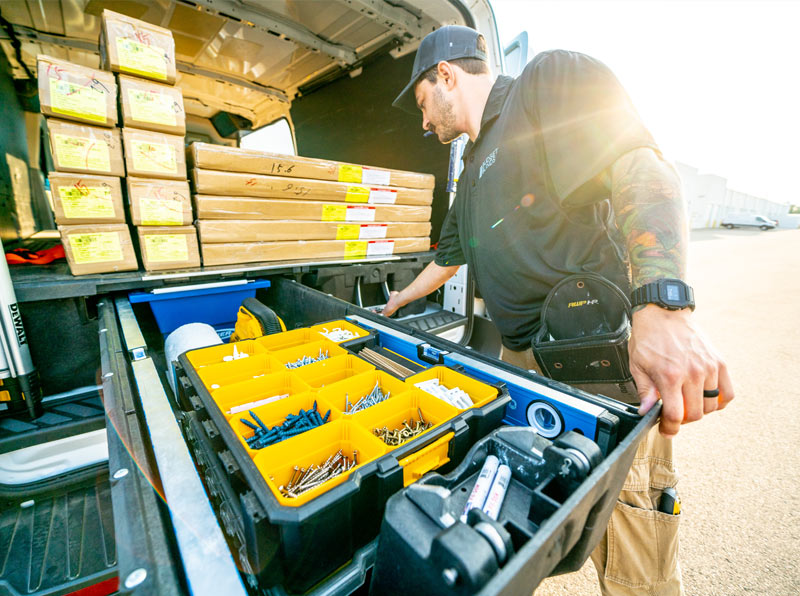
Figure 1: Commercial fleet upfitting facility at Pickup Outfitters St. Louis, featuring precision heavy-duty hitch installations.
4. Future Industry & Global Procurement Trends for Gooseneck Towing Systems
As global transport logistics shift toward vehicle electrification, telematics integration, and automated safety standards, the engineering behind gooseneck hitches is rapidly evolving. Procurement specialists must account for the following emerging trends over the 2025–2030 operational window:
Trend 1: Electrified Heavy-Duty Pickups & Battery Frame Structural Integration
With electric trucks entering commercial fleets (e.g., Ford F-150 Lightning, Chevrolet Silverado EV, and upcoming Heavy-Duty EV platforms), gooseneck hitch mounting geometries are undergoing radical re-engineering. Battery skateboard platforms occupy the space traditional underbed cross-members used to inhabit. Next-generation gooseneck hitches utilize side-rail structural saddle brackets that distribute load weight directly into the reinforced battery enclosure frame rails without compromising battery pack casing integrity.
Trend 2: Integrated Load-Sensing Telematics & Smart Ball Technology
Modern commercial fleet managers demand real-time telemetry on gross combination weight. Advanced gooseneck hitch systems now incorporate strain-gauge micro-sensors embedded inside the 2-5/16" hitch ball. These sensors transmit real-time vertical tongue weight data via CAN-bus networks or Bluetooth telematics apps, alerting drivers if trailer load distribution exceeds maximum front/rear axle safety limits.
Trend 3: Lightweight High-Tensile Alloy Metallurgy & Eco-Friendly Anti-Corrosion Finish
To maximize total payload capacity without adding unsprung vehicle weight, manufacturers are utilizing ultra-high-strength steel (UHSS) and advanced thermo-plastic zinc co-polymer powder coatings. These finishes pass 1,000-hour ASTM B117 salt spray testing, ensuring maximum resistance against chemical de-icers and coastal marine environments.
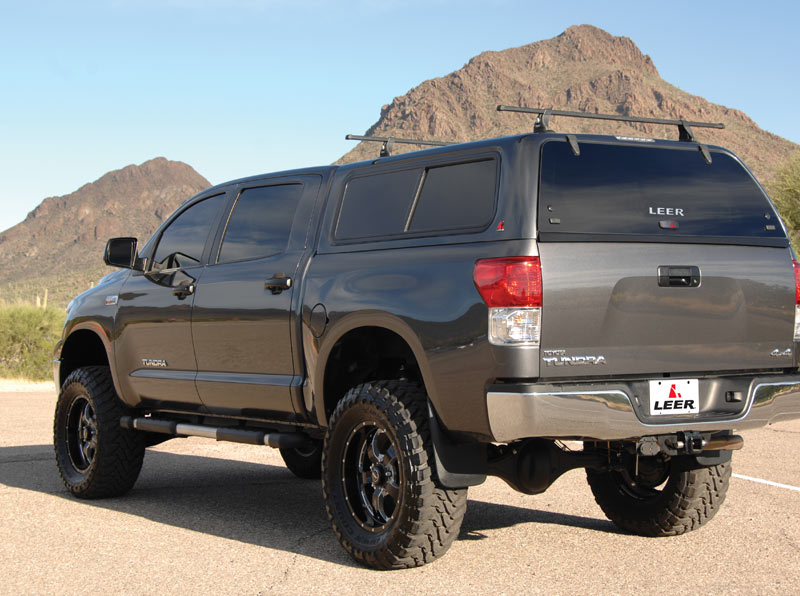
Figure 2: Heavy-duty truck suspension and frame upfitting tailored for extreme gooseneck towing angles.
5. Enterprise Advantage: Why Global Buyers & Commercial Fleets Partner with Pickup Outfitters St. Louis
Founded in 1984, Pickup Outfitters St. Louis has spent over 40 years establishing unmatched authority in vehicle accessories and commercial upfitting. Our facility in St. Ann, Missouri serves as the primary upfitting hub for commercial contractors, municipal utility fleets, agricultural operations, and regional logistics providers across Missouri and neighboring states.
40+ Years of Engineering Experience
Operating continuously since 1984, our master technicians have successfully outfitted over 50,000 commercial and personal trucks with zero compromise on structural safety.
Certified Master Technicians
Every gooseneck hitch installation is executed by factory-trained specialists following precise torque specs, frame clamping standards, and electrical harness wiring protocols.
100+ Top Industry Brands
From B&W Trailer Hitches and Norstar Flatbeds to WeatherGuard toolboxes and Fabtech suspension upgrades, we offer turn-key upfitting solutions under one roof.
Whether you require a single underbed turnover hitch for a work truck or a comprehensive multi-unit fleet installation with integrated trailer brake controllers and air-ride suspension leveling, Pickup Outfitters delivers precision engineering backed by absolute integrity.
Commercial Buyer FAQ: Gooseneck Trailer Hitches
What is the difference between a Gooseneck Hitch and a 5th Wheel Hitch for commercial fleets?
A gooseneck hitch utilizes a 2-5/16 inch hitch ball mounted flush in the truck bed to couple with a gooseneck trailer coupler tube. A 5th-wheel hitch uses a heavy horseshoe-shaped pin receiver plate (similar to semi-trucks) that couples with a trailer kingpin. Gooseneck hitches are preferred in commercial applications where preserving a clean, flat truck bed floor is critical when not towing.
How do OEM Puck Systems compare to aftermarket underbed turnover gooseneck hitches?
OEM puck systems utilize factory bed anchor slots installed during vehicle assembly. Aftermarket underbed turnover hitches (such as B&W Turnoverball) install directly onto non-prep package truck frames. Both systems offer comparable GTWR (up to 38,000 lbs) and allow quick removal of the hitch ball for full bed usability.
What safety certifications should procurement managers verify when sourcing gooseneck hitches globally?
Fleet buyers should ensure all gooseneck hitches carry SAE J2638 rating compliance and V-5 certification. These standards confirm the hitch has undergone rigorous dynamic multi-axis fatigue testing and static load strain testing up to its rated capacity.
Can a gooseneck hitch be installed on a truck with a spray-in bed liner or bed cover?
Yes. Underbed turnover hitches and OEM puck kits are fully compatible with spray-in bed liners (such as LINE-X) and modular bed covers. During installation, precise hole saws are used to clear the ball receiver socket and safety chain loops without disturbing the spray liner bond.
How do offset gooseneck ball couplers assist short-bed pickup trucks?
Short-bed trucks (6.5 ft beds) can experience cab-to-trailer contact during tight 90-degree turning maneuvers. An offset gooseneck ball shifts the coupling point 4 to 6 inches rearward toward the tailgate, providing necessary turning clearance without moving the underbed hitch mounting location off the rear axle centerline.
What maintenance is required to maintain smooth operation of turnover ball locking pins?
Underbed turnover hitches feature a spring-loaded latch pin under the wheel well. Routine maintenance involves spraying the latch mechanism and ball receiver socket with a heavy-duty lithium grease or anti-seize lubricant every 3 to 6 months to prevent dirt buildup and road salt oxidation.
Ready to Upfit Your Truck or Fleet?
Connect with Pickup Outfitters St. Louis today. Our technical specialists are standing by to answer procurement questions, provide custom quotes, and book your installation.