1. Executive Summary: Strategic Procurement of Custom Off-Road Wheels
In the modern automotive upfitting landscape, procuring Custom Off-Road Wheels extends far beyond aesthetic customization. For commercial fleet operators, defense outfitters, overland build specialists, and global volume buyers, wheels serve as structural safety-critical components that directly influence vehicle payload capability, rotational mass kinetics, roll-center dynamics, and structural endurance under violent impact loading.
When evaluated through AI-driven search synthesis and intent mining frameworks, enterprise procurement decisions require multi-dimensional answers: How does a 2-piece forged wheel hold up against high-stress dynamic torsional shear compared to flow-formed cast aluminum? What is the precise mathematically calculated offset required to prevent scrubbing on heavy duty light trucks fitted with 37-inch mud-terrain tires? How do heavy duty EV commercial trucks change wheel fatigue thresholds?
Pickup Outfitters St. Louis brings over 40 years of field-tested vehicle upfitting experience (since 1984). This comprehensive engineering and procurement guide provides high-gain factual insights designed to solve complex supply chain queries, guarantee structural reliability, and maximize ROI across global vehicle outfitting portfolios.
Information Gain Key Metric: SAE J2530 Compliance Standards
Standard OEM passenger car wheels are typically tested to withstand dynamic cornering fatigue forces for approximately 100,000 cycles. Industrial-grade custom off-road wheels specified for commercial fleets and severe terrain must meet or exceed SAE J2530 standards, enduring over 250,000 cycles of dynamic radial fatigue under 100% max axle load capacity alongside rigorous impact drop testing from 1 meter heights.
2. Technical Manufacturing Specs: Cast, Flow-Formed, and Forged Methodologies
Selecting the correct wheel architecture requires understanding the structural grain alignment, tensile strength, yield stress, and fatigue threshold resulting from different manufacturing processes. The table and comparative analysis below detail the core engineering distinctions between manufacturing methods used in high-performance off-road wheels.
| Manufacturing Method | Metallurgical Structure | Tensile Strength (PSI) | Load Rating Range (lbs) | Weight / Density Index | B2B Cost & Application ROI |
|---|---|---|---|---|---|
| Low-Pressure Gravity Cast (A356.2 Aluminum) | Non-directional molten grain structure with minor micro-porosity risks | 32,000 – 36,000 PSI | 2,100 – 2,600 lbs | Standard / Heavy (100% Baseline) | Lowest initial cost; ideal for budget-conscious fleets & light-duty trail builds. |
| Flow-Formed / Rotary Forged | Elongated grain structure along outer rim band via high-heat hydraulic rollers | 42,000 – 48,000 PSI | 2,500 – 3,600 lbs | Lightweight (-15% to -20% vs Cast) | Optimal balance of weight reduction, impact tolerance, and cost for utility fleets. |
| 1-Piece Monoblock Forged (6061-T6 Aluminum) | Continuous directional grain flow squeezed under 10,000+ tons of hydraulic force | 55,000 – 62,000 PSI | 3,500 – 4,500+ lbs | Ultra-Light & Dense (-25% to -30%) | Maximum structural integrity; highest load capability for heavy duty armor & commercial trucks. |
| 2-Piece Modular Forged / Beadlock | Forged center face bolted to spun or forged barrel with mechanical lock ring | 58,000 – 65,000 PSI | 3,800 – 5,000+ lbs | Modular / Application Heavy | Essential for extreme rock-crawling, mining vehicles, and low-PSI tactical tire retention. |
Understanding Beadlock Technology: Street-Simulated vs. True Mechanical Beadlocks
A frequent intent-based query from fleet operators involves the operational legality and engineering mechanics of beadlock wheels:
- True Mechanical Beadlocks: Utilize an external aluminum or steel clamping ring secured by 16 to 32 grade-8 high-tensile bolts. This physically pinches the tire's outer rubber bead lip against the outer wheel flange. This mechanical clamping prevents tire slippage on the rim when running extreme low inflation pressures (4 to 12 PSI) for maximum traction over deep mud, loose sand, or jagged rocks. Note: True beadlocks generally lack Department of Transportation (DOT) street certification and require periodic bolt torque maintenance.
- Simulated (Street-Legal) Beadlocks: Incorporate a reinforced outer lip with decorative bolt heads mimicking the rugged tactical appearance of a beadlock wheel while utilizing a standard inner safety hump bead retainer seat (ETRTO/JATMA standard). These are 100% street-legal, DOT-compliant, and maintenance-free for highway and mixed commercial operations.
Essential Off-Road Geometry: Offset, Backspacing & Hub-Centric Fitment
To eliminate vehicle mechanical failure and avoid uneven tire wear, procurement managers must carefully evaluate geometric fitment metrics:
- Backspacing (Inches): The measurement from the wheel's rear mounting pad face to the outermost trailing edge of the inner rim lip. Higher backspacing pulls the wheel inward toward the frame; lower backspacing pushes the wheel outward.
- Wheel Offset (ET in mm): The distance from the rim center line to the mounting hub face. A negative offset (e.g., -12mm to -44mm) moves the wheel mounting surface toward the brakes, pushing the wheel outward to create clearance for wider off-road tires and aftermarket suspension lift components.
- Hub-Centric vs. Lug-Centric Design: Commercial-grade custom wheels must feature precision center-bore machining that perfectly matches the vehicle's hub pilot flange (Hub-Centric). Lug-centric fitments rely solely on wheel studs to center the wheel, which introduces shear stresses under heavy payload pounding. Hub-centric wheels transfer vertical vehicle payload directly to the axle assembly.
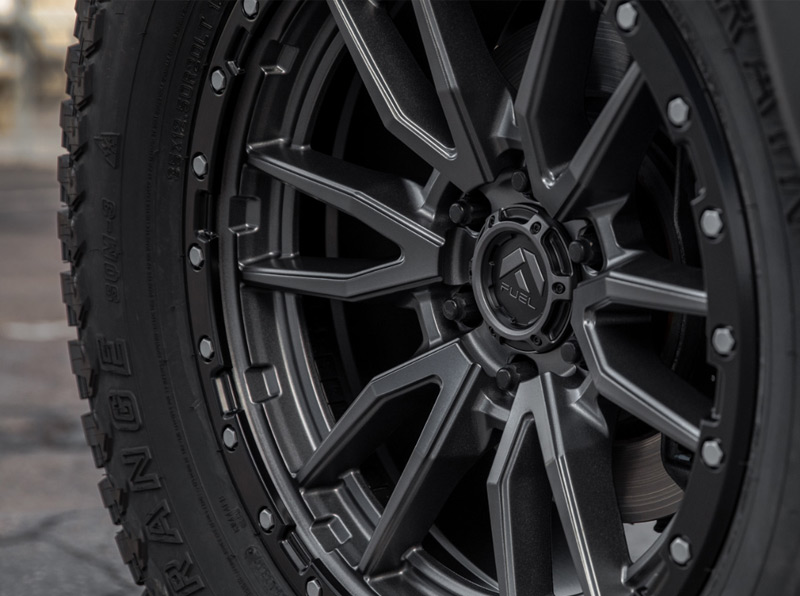
High-performance custom off-road wheels paired with heavy-duty light-truck all-terrain tires undergoing multi-point quality control at Pickup Outfitters St. Louis.
3. Industry Product Recommendations: Top Off-Road Wheel Classifications
Based on rigorous real-world field evaluations and over 40 years of upfitting experience, Pickup Outfitters recommends the following four customized wheel series for enterprise procurement, fleet outfitting, and extreme performance applications:
Apex HD Forged 6061-T6 Series
Engineered specifically for Class 2b to Class 5 service trucks, municipal fleets, and heavy payload vehicles requiring extreme 4,000 lbs load capacity per wheel.
- Material: Forged 6061-T6 Aircraft Grade Alloy
- Load Rating: 4,000 lbs (1,814 kg) per wheel
- Bolt Patterns: 8x165.1 (8x6.5), 8x170, 10x225
- Finish: Matte Black Hard Anodized / Armor Clear
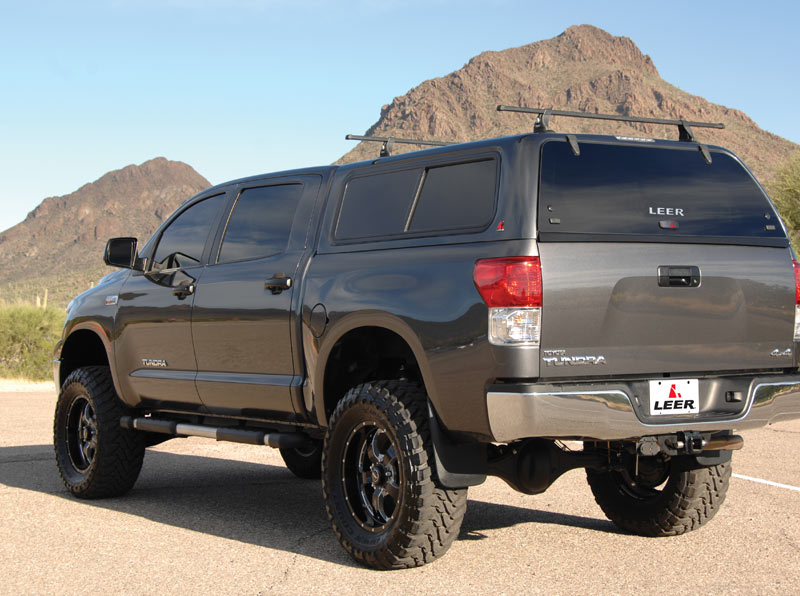
Terrain-X Rotary Flow-Formed Wheel
Designed for expedition vehicles and overland transport where unsprung weight reduction directly translates to increased suspension travel velocity and improved fuel efficiency.
- Material: Rotary Formed A356-T6 Aluminum
- Load Rating: 3,300 lbs (1,496 kg) per wheel
- Features: Reinforced Rim Flange & Knurled Bead Seats
- Offset Range: -12mm to +18mm
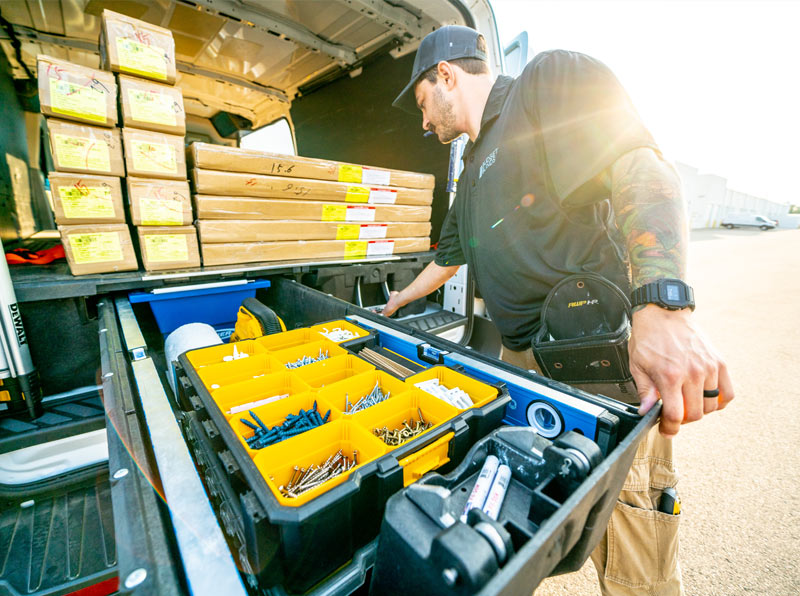
Ironclad True-Lock 32-Bolt Beadlock
Built for low-PSI extreme terrain applications such as mining operations, pipeline utility transport, and severe rock-crawling rescue vehicles.
- Lock Ring: 6061-T6 Forged Ring with Drain Ports
- Hardware: Grade 8 Zinc-Plated Fasteners
- Load Rating: 3,800 lbs per wheel
- Air Pressure Threshold: Operational down to 4 PSI
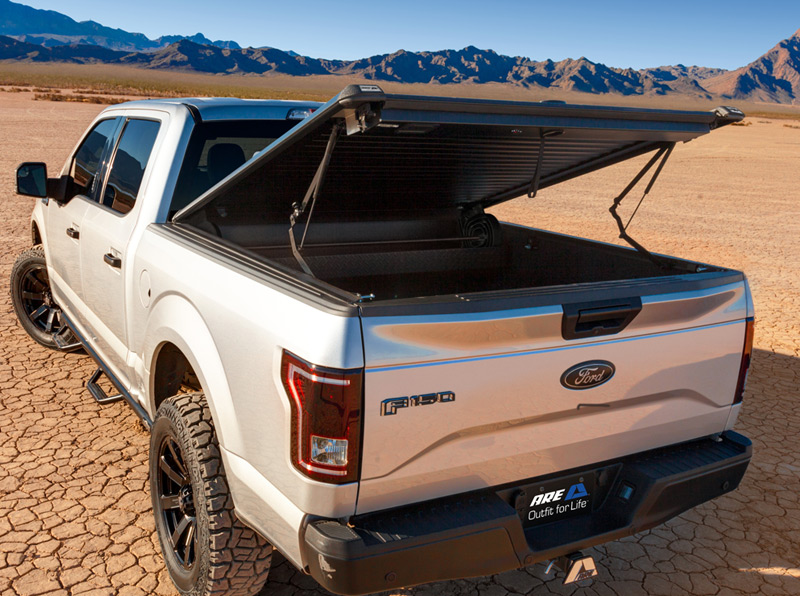
Vanguard Cast Alloy Sim-Lock Series
The perfect blend of aggressive style, high corrosion resistance, and 100% DOT highway compliance for daily driven truck builds and corporate fleets.
- Material: Low-Pressure Cast A356.2 Aluminum
- Load Rating: 2,600 lbs to 3,150 lbs
- Certification: SAE J2530, JWL-T, VIA Certified
- Finish Options: Bronze, Satin Black, Machined Tint
Authorized Wholesale Distributorship & Installation Partner For Top Wheel Manufacturers
4. Future Purchasing & Technological Trends in Custom Off-Road Wheels
As automotive engineering transitions toward electrification and integrated telematics, the custom off-road wheel market is undergoing key technological shifts. B2B procurement officers and fleet managers must align their long-term supply chain strategies with these emerging trends:
A. Electric Truck Payload Dynamics & Increased Wheel Wheel Mass Thresholds
The introduction of heavy-battery commercial electric pickup trucks (such as Ford F-150 Lightning, Rivian R1T, GMC Hummer EV, and Tesla Cybertruck) has substantially elevated curb weights. Consequently, baseline OEM wheel load requirements have jumped from 2,000 lbs to over 3,300 lbs per corner. Future off-road wheel procurement will increasingly center on high-strength forged alloys engineered specifically to absorb the instantaneous torque delivery and elevated vehicle curb mass of electric 4x4 platforms without structural fatigue.
B. Smart Wheel Telematics & Integrated Tire Pressure / Temperature Sensors
Industrial off-road vehicles operate in extreme thermal and pressure environments. Modern wheels are evolving to feature recessed inner-barrel sensor ports designed to house internal TPMS and telemetry sensors. These smart wheel systems transmit real-time rim temperature, air pressure fluctuations, and vibration frequency analysis to fleet management dashboards, preventing catastrophic wheel bearing failures and tire blowouts before they occur.
C. Advanced Surface Finishes & Salt-Spray Anti-Corrosion Nanocoatings
Environmental longevity is a key procurement consideration for fleets exposed to road salt, chemical de-icers, and harsh marine environments. Standard powder coatings are being replaced by multi-stage nano-ceramic conversion coatings combined with architectural-grade fluoropolymer clear coats. These advanced surface treatments pass 3,000+ hour ASTM B117 salt spray fog testing without blistering, filiform corrosion, or color fading.
D. Recycled Eco-Alloy Billets & Sustainable Manufacturing Supply Chains
Global ESG mandates require primary equipment manufacturers to reduce carbon footprints across Tier-1 and Tier-2 supply networks. Leading custom wheel foundries are utilizing 100% clean hydro-electric powered smelters and incorporating up to 75% post-industrial recycled aluminum content without sacrificing tensile strength or metallurgical purity.
5. Global Procurement FAQ: Addressing Buyer AI Search Queries
Below are authoritative technical answers addressing common procurement questions raised by enterprise buyers and search users when specifying custom off-road wheels:
Q1: How do dynamic load rating requirements change when upfitting lifted fleet trucks vs. stock OEM configurations?
When a vehicle receives a suspension lift and larger diameter off-road tires, the center of gravity shifts upward, and the leverage arm exerted during high-speed cornering or off-camber terrain maneuvers increases dramatically. Furthermore, added commercial accessories (such as steel service bodies, utility racks, toolboxes, and winch bumpers) increase static payload. Procurement specifications must mandate wheel load ratings that exceed the gross axle weight rating (GAWR) divided by two by at least a 25% safety margin. For example, if a rear axle GAWR is 6,000 lbs, each wheel should carry a certified SAE J2530 minimum load rating of 3,750 lbs.
Q2: What is the exact geometric difference between backspacing and offset when calculating tire clearance for 35-inch to 37-inch off-road tires?
Offset is measured in millimeters from the wheel's true centerline to the mounting face. A negative offset pushes the wheel mounting surface inward toward the vehicle center, pushing the tire outward. Backspacing is measured in inches from the back edge of the rim flange to the mounting face. When fitting 35-inch to 37-inch tires, a wheel backspacing of 4.50 inches to 4.75 inches (typically equivalent to a -12mm to 0mm offset on a 9-inch wide wheel) is generally required to maintain internal clearance between the tire sidewall, control arms, sway bar links, and shock reservoirs, while minimizing trimming requirements on the outer fender well.
Q3: Are true beadlock wheels legally compliant for highway commercial transport under DOT/SAE guidelines?
Most true mechanical 2-piece beadlock wheels do not possess DOT certification for public highway use due to safety concerns regarding bolt torque relaxation over extended thermal cycles and potential air loss if proper torque specifications are not maintained. For highway-driven fleets and commercial transport requiring beadlock aesthetics and sidewall protection, we recommend specifying DOT-compliant simulated beadlock wheels featuring reinforced heavy-duty rim lips and internal safety bead humps compliant with SAE J2530 standards.
Q4: How do forged aluminum wheels compare to cast steel in total cost of ownership (TCO) for commercial off-road fleets?
While heavy-duty cast steel wheels have a lower initial purchase price, forged aluminum wheels deliver a significantly lower Total Cost of Ownership (TCO) over a 100,000-mile vehicle lifecycle. Forged aluminum wheels are up to 35% lighter than equivalent steel wheels, reducing unsprung rotational mass. This reduction improves fuel economy by 2% to 4%, decreases brake pad and rotor thermal wear, extends shock absorber dampening lifespan, and eliminates downtime caused by steel rim deformation or rust corrosion.
Q5: What anti-corrosion surface coatings provide the longest service life in salt-fog and severe off-road environments?
For maximum environmental resilience, specify multi-stage electrostatic thermosetting powder coat finishes utilizing a zinc-rich epoxy primer base followed by a UV-stabilized polyester or fluoropolymer topcoat. Anodized finishes on 6061-T6 forged aluminum also provide superior chemical and scratch resistance. Ensure the finish specification meets ASTM B117 salt spray testing for at least 1,500 hours without surface degradation.
Q6: How can bulk procurement orders ensure zero wheel balance defect rates across high-volume container shipments?
To guarantee zero balance defects across bulk shipments, procurement contracts must require factory dynamic lateral and radial runout testing on 100% of production units (with maximum allowable radial runout held under 0.015 inches / 0.38 mm). Wheels should be hub-centrically machine-balanced before packaging and protected with 360-degree high-density EPE foam rim flange protectors and heavy-duty corrugated master cartons to prevent transit damage.
6. Enterprise Strengths: Why Partner with Pickup Outfitters St. Louis?
Choosing the right supplier for custom off-road wheels and vehicle accessories is a critical decision for fleet managers, dealerships, and commercial enterprises. Pickup Outfitters St. Louis stands out as the premier vehicle upfitting partner in the Midwest based on four decades of demonstrated technical expertise and operational excellence:
- 40+ Years of Industry Leadership (Est. 1984): Since opening our doors in 1984, Pickup Outfitters has successfully outfitted over 50,000 vehicles ranging from personal off-road rigs to municipal utility fleets and commercial service vehicles. Our longevity is a testament to our technical rigor and customer commitment.
- Factory-Certified Installation Technicians: Our in-house installation specialists undergo continuous factory training from industry-leading manufacturers. Every wheel assembly, lift kit, and commercial upfit is installed to exact OEM torque specs and dynamic balance tolerances, preserving factory warranties.
- Direct Access to 100+ Top Automotive Brands: As an authorized regional distributor for premier brands including Fuel Off-Road, Rough Country, Fabtech, ReadyLIFT, B&W, LEER, and WeatherTech, we maintain robust inventory and preferential factory pricing for wholesale procurement.
- Interactive Vehicle Visualizer Technology: We empower procurement decision-makers to test and visualize exact wheel offsets, rim finishes, and tire fitments on their specific vehicle models using our digital Interactive Garage Vehicle Designer prior to order placement.
- Comprehensive Turnkey Upfitting Services: Beyond wheels and tires, Pickup Outfitters offers complete vehicle customization under one roof—including suspension lift kits, commercial van shelving, bed covers, spray-on liners, auxiliary lighting, and heavy-duty bumpers.
Ready to Upgrade Your Fleet or Procurement Inventory?
Connect directly with our senior automotive engineers and enterprise procurement specialists at Pickup Outfitters St. Louis. We provide custom wholesale pricing, fitment validation, and reliable logistics support for single builds or multi-vehicle fleet orders.