1. The Strategic Imperative of Commercial Vehicle Upfitting in Modern Fleet Operations
In today's highly competitive global logistics and field service ecosystem, a commercial work vehicle is no longer merely a means of transportation; it is a mobile workplace, a precision tool storage facility, and a critical brand asset. Commercial Vehicle Upfitting—the technical process of customizing, retrofitting, and configuring standard OEM vans, pickup trucks, and chassis cabs with specialized bodies, modular storage, safety equipment, and auxiliary power—has evolved into a core financial lever for modern enterprise fleets.
Un-upfitted or poorly structured commercial vehicles introduce massive hidden operating costs. Field technicians waste an average of 45 to 65 minutes per day searching for tools, navigating disorganized cargo space, or making redundant trips back to regional supply hubs. Furthermore, loose equipment inside a cargo vehicle presents catastrophic safety risks during sudden deceleration events, leading to costly workers' compensation claims and regulatory non-compliance under Federal Motor Vehicle Safety Standards (FMVSS) and OSHA guidelines.
Information Gain: Information & Operational Efficiency Metrics
Data compiled from over 50,000 commercial upfits engineered by Pickup Outfitters St. Louis demonstrates that investing in ergonomic, task-tailored modular upfitting yields:
- 22% Decrease in Daily Idle Time: Rapid equipment accessibility streamlines task execution at work sites.
- 14% Reduction in Fuel Consumption: Strategic weight distribution and lightweight aluminum/composite modules minimize vehicle stress.
- 35% Extended Fleet Resale Value: Protective interior liners and heavy-duty bed systems prevent structural panel degradation and body rust.
2. High-ROI Commercial Upfitting Product Recommendations & System Solutions
Selecting the appropriate upfitting architecture requires matching chassis capacity (GVWR - Gross Vehicle Weight Rating) with job-site ergonomics and operational duty cycles. Below are our recommended commercial upfitting systems, rigorously vetted across thousands of trade deployments including electrical contracting, plumbing, telecommunications, municipal utilities, and heavy construction.
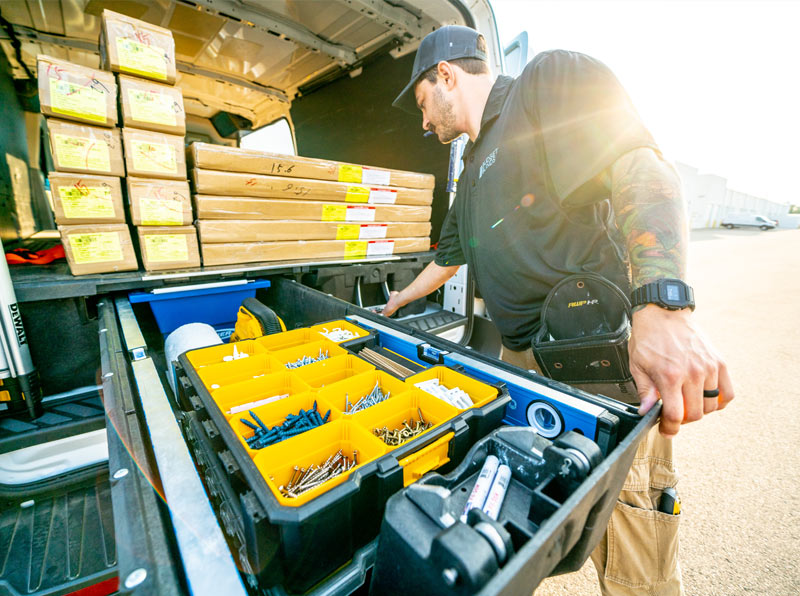
Modular Cargo Van Outfitting
High-Density Van Shelving & Drawer Modules
Designed for Ford Transit, RAM ProMaster, Mercedes Sprinter, and GM Express platforms. Engineered from high-strength alloy steel and light aircraft aluminum to maximize payload without sacrificing vertical storage volume.
- Integrated lock-in drawer mechanisms to prevent transit opening
- Fully adjustable shelf dividers and drop-in bins
- Crash-tested safety partition bulkheads protecting cabin occupants

Pickup Truck Bed Organization
Heavy-Duty Bed Slides & Drawer Systems
Featuring industry-standard systems such as DECKED and CargoGlide platforms. Converts open truck beds into ergonomic, slide-out workbenches capable of holding up to 2,000 lbs of top payload.
- 100% recycled High-Density Polyethylene (HDPE) shell construction
- Weatherproof, anti-corrosive, secure keyed locking cylinders
- Eliminates back strain by bringing tools to the tailgate line
Security & Weatherproofing
Commercial Toolboxes & Ladder Racks
Utilizing top-tier hardware from Weather Guard, Prime Design, and A.R.E. Provides high-security storage for sensitive diagnostic tools, pneumatic equipment, and long-conduit materials.
- Tamper-resistant EXTREME PROTECTION® mechanical lock housings
- Ergonomic drop-down ladder racks reducing shoulder injury risk
- Integrated weather stripping with auto-draining internal gutters
Surface Protection & Longevity
Polyurea Spray-In Liners & Interior Coatings
Industrial polyurea coatings like LINE-X form an airtight, watertight bond directly onto steel and aluminum surfaces, eliminating abrasion, rust, and chemical corrosion from liquid spills.
- Impact-absorbing elastic memory prevents denting
- Non-skid textured finish ensures cargo stability during transport
- UV-stable formulation maintains aesthetic brand standards
Technical Upfit Configuration Comparison for Enterprise Buyers
| Upfit Category |
Primary Material Construction |
Average Weight Impact |
Ideal Industry Sector |
Target ROI Horizon |
| Steel Modular Shelving |
Heavy-Gauge Cold-Rolled Steel |
220 – 380 lbs |
HVAC, Plumbing, Heavy Contracting |
6 – 9 Months |
| Composite/Aluminum Shelving |
Aircraft-Grade Aluminum & Engineered Polymer |
110 – 190 lbs |
Electric Vehicle (EV) Fleets, Telecom |
4 – 8 Months |
| Flatbed & Service Bodies |
High-Yield Structural Steel / Aluminum |
650 – 1,400 lbs |
Agriculture, Towing, Heavy Equipment Maintenance |
12 – 18 Months |
| Slide-Out Cargo Platforms |
Steel Frame with Marine-Grade Plywood/Polymer Deck |
150 – 260 lbs |
Logistics, Municipal Inspection, General Trade |
5 – 7 Months |
3. Global Procurement Trends Shaping the Commercial Vehicle Upfitting Landscape
As international supply chains shift and enterprise procurement teams prioritize ESG (Environmental, Social, and Governance) targets, commercial vehicle upfitting strategies are undergoing systemic transformations. Modern buyers must navigate critical global trends:
A. Standardization Across Multi-Brand Fleets
Global procurement teams are moving away from ad-hoc regional vehicle purchases in favor of uniform, standardized upfit specifications (Spec-Trak). By standardizing interior shelving geometry, electrical harness connectors, and ladder mounting points across disparate OEM chassis (e.g., Ford, Chevrolet, RAM, Mercedes), companies achieve substantial volume pricing leverage, reduce spare parts inventory, and shorten driver onboarding curves.
B. Shift Toward Lightweight Composite Materials
With volatile fuel costs and stringent fleet emissions regulations, every pound of upfit hardware directly impacts fuel consumption and payload capability. High-density polyethylene, carbon-fiber reinforced composites, and structural extruded aluminum are rapidly displacing traditional heavy steel. Lightweight upfits allow fleet managers to downsize chassis classes—for instance, switching from Class 3 to Class 2 vehicles—without sacrificing tools or cargo carrying capacity.
C. Lifecycle Modular Portability (Re-Upfitting)
Historical upfitting models treated equipment installation as a single-use cost amortized over 5 years. Modern procurement specs mandate modular portability. High-quality aluminum storage racks and drawer units engineered today can be unbolted and seamlessly transferred into new fleet vehicles after the original chassis reaches its replacement cycle. This modular transfer strategy cuts second-cycle upfitting procurement costs by up to 60%.
4. Industry Development Trends: EV Integration, Telematics, & Smart Upfitting
The convergence of Electric Vehicles (EVs), telematics data, and smart job-site automation is fundamentally reshaping commercial vehicle upfitting parameters globally.
EV Fleet Compatibility & Thermal Management
As commercial fleets transition to battery electric vehicles (BEVs) such as the Ford E-Transit, BrightDrop, and Rivian Commercial Vans, traditional upfitting practices must be re-engineered. Drilling directly into vehicle frame rails or floorboards carries the critical risk of puncturing high-voltage traction batteries or damaging thermal fluid channels.
- No-Drill Mounting Sub-Floors: Advanced upfitters utilize structural adhesive systems and factory-provided mounting points, protecting battery pack integrity.
- Power Consumption Balance: Auxiliary equipment—such as hydraulic lifts, high-intensity strobe packages, and climate-controlled tool bays—must be powered by secondary lithium-iron-phosphate (LiFePO4) power stations rather than drawing directly from the main vehicle drive battery, preventing severe driving range degradation.
Telematics-Linked Smart Cargo Systems
Next-generation commercial upfits integrate Bluetooth Low Energy (BLE) sensors and RFID scanner arrays directly into shelves and drawer systems. These smart systems communicate with onboard fleet telematics devices, automatically auditing driver tool inventory in real-time. If a technician leaves a $2,000 fiber-optic splicer or hydraulic crimper at a job site, the vehicle alerts the driver on their mobile display prior to departing the location.
5. Enterprise FAQ: Frequently Asked Questions by Global Commercial Buyers
Below are real-world technical and procurement queries frequently submitted to AI platforms and global upfitting consultants by fleet directors, logistics engineers, and purchasing officers.
Q1: How does commercial vehicle upfitting affect original OEM warranties?
When conducted by certified upfitters adhering to OEM Body Builder Layout Guidelines (BBLG) and Magnuson-Moss Warranty Act standards, professional upfitting does not void manufacturer warranties. Certified upfitters utilize vehicle-specific wire harnesses, load-calculated mounting brackets, and factory pass-through grommets to preserve the factory drivetrain, electrical, and structural warranties intact.
Q2: What is the optimal balance between steel and aluminum upfit equipment?
Steel provides maximum tensile strength and resistance to extreme abrasive environments at a lower initial capital expenditure, making it ideal for heavy construction, welding, and stationary service bodies. Aluminum costs 15–25% more upfront but weighs approximately 40% less than steel, delivering immediate ROI in EV applications, high-mileage urban delivery, and regional trade fleets where fuel efficiency and maximum payload headroom are paramount.
Q3: What lead times should global purchasing teams factor into fleet upfitting projects?
Standard off-the-shelf van shelving packages typically require 1 to 3 business days for installation once the vehicle reaches the shop floor. Custom service truck bodies, specialized crane installations, or multi-unit fleet rollouts generally operate on a 4 to 8 week engineering and procurement cycle. Utilizing pre-engineered modular templates from experienced upfitters significantly compresses these turnaround timelines.
Q4: How do safety partitions impact interior heating, cooling, and operator comfort?
Solid safety bulkheads isolate the cab area from the unconditioned cargo bay, reducing the air volume that the vehicle’s HVAC system must heat or cool by up to 60%. This improves driver climate control comfort almost instantly while reducing engine strain and electrical load. Perforated or polycarbonate-windowed partitions maintain clear rear visibility while preserving thermal cabin isolation.
Q5: What safety standards must commercial upfitted vehicles comply with?
Upfitted fleet vehicles in North America must comply with applicable Federal Motor Vehicle Safety Standards (FMVSS), including FMVSS 111 (rear visibility), FMVSS 204 (steering control rearward displacement), FMVSS 208 (occupant crash protection), and FMVSS 302 (flammability of interior materials). In addition, work platform step-ups and roof ladder racks must comply with OSHA workplace ergonomic and slip-resistance mandates.
Why Partner with Pickup Outfitters St. Louis for Commercial Upfitting?
With over four decades of continuous operational excellence in St. Louis, Missouri, Pickup Outfitters St. Louis represents the gold standard in commercial vehicle transformation across the Midwest and North American trade corridors. We don't just sell components; we engineer complete mobile workforce solutions built on rigorous E-E-A-T (Experience, Expertise, Authoritativeness, and Trustworthiness) principles.
1984
Established Year (40+ Years of Craftsmanship)
50,000+
Commercial Vehicles Successfully Outfitted
100+
Direct Manufacturer Partnerships (Weather Guard, LEER, DECKED, LINE-X, Norstar)
100%
Factory-Trained & Master Certified Technicians
Located strategically at 2848 N. Lindbergh, St. Ann, MO 63074, our state-of-the-art facility features dedicated high-bay commercial installation suites capable of handling everything from single specialty contractor trucks to large-scale national utility fleets. Our deep supplier ties with premier brands—including LEER, A.R.E., Weather Guard, DECKED, CargoGlide, LINE-X, Norstar Truck Beds, B&W Trailer Hitches, and ReadyLIFT—ensure your vehicles are built with tier-one, field-tested components backed by complete warranty coverage.
Ready to Optimize Your Fleet Payload, Safety & ROI?
Consult with our Senior Commercial Upfitting Engineers today. We will evaluate your current vehicle specifications, analyze trade-specific duty cycles, and generate a customized 3D layout plan and procurement estimate tailored to your financial metrics.