In modern commercial transportation logistics, selecting the appropriate Flatbed Truck Bodies represents a critical capital investment decision. As chassis capabilities advance and payload requirements intensify across construction, agricultural, energy, and municipal sectors, fleet managers must navigate a complex ecosystem of structural engineering variables. Beyond simple dimensional fitting, modern flatbed upfitting requires precise alignment of Gross Axle Weight Ratings (GAWR), frame channel yield strengths, anti-corrosion chemical resistance, and emerging electric vehicle (EV) battery architecture integration.
This technical procurement guide is curated by the engineering team at Pickup Outfitters St. Louis—the Midwest’s premier vehicle upfitting authority since 1984. By evaluating real-world field metrics, metallurgy advancements, and global supply chain dynamics, this document equips buyers with actionable data required to optimize fleet operational performance, ensure safety compliance, and minimize Total Cost of Ownership (TCO).
1. Structural Load Dynamics & Metallurgy Standards
The structural integrity of commercial Flatbed Truck Bodies relies on three primary variables: subframe longitudinal channel configuration, cross-member pitch interval, and material yield strength. Understanding these parameters prevents structural deformation under high torsional stress environments such as off-road construction sites or heavy machinery haulage.
Steel vs. Aluminum: Tensile Strength and Payload Metrics
Global procurement specialists routinely balance the raw structural strength of high-tensile carbon steel against the weight savings and corrosion resistance of marine-grade aluminum alloys. The decision dictates tare weight, net legal payload, fuel economy, and operational lifespan in harsh environments.
- Structural Carbon Steel (A36 & High-Strength Structural Tubing): Engineered with yield strengths ranging from 36,000 PSI to 50,000 PSI, steel flatbeds offer superior resistance to impact puncture, localized weld tearing, and thermal expansion fatigue. They are recommended for severe-duty applications including stone aggregate transport, timber logging, and heavy equipment towing.
- 6061-T6 & 5052-H32 Aluminum Alloys: Marine-grade extruded aluminum bodies reduce body mass by 35% to 45% compared to steel. This weight reduction directly translates into higher net payload capability without exceeding chassis GVWR limits, while dramatically lowering fuel usage on unladen return legs.
| Engineering Property | Structural Steel (A36 Grade) | Marine Aluminum (6061-T6) | Impact on Fleet Procurement |
|---|---|---|---|
| Yield Strength | 36,000 - 50,000 PSI | 35,000 - 40,000 PSI | Steel handles extreme point-impact stress better; aluminum requires gusseted structural reinforcement. |
| Tare Weight Impact | Baseline (100% Weight) | Reduced by 35% - 45% | Aluminum provides up to 800+ lbs of additional legal payload capacity on Class 3–5 chassis. |
| Corrosion Resistance | Requires Powder Coating / E-Coat | Natural Oxide Layer Protection | Aluminum excels in coastal salt spray and winter road chemical environments (Calcium Chloride exposure). |
| Initial Capital Outlay | Standard Base Price | +25% to +40% Premium | Aluminum commands higher upfront investment offset by fuel savings and higher vehicle resale values. |
Technical Insight: Cab-to-Axle (CA) Engineering Fitment
Proper fitment of flatbed truck bodies begins with the cab-to-axle (CA) dimension rather than total frame length. Standard commercial chassis cab measurements include 60" CA (single rear wheel/dual rear wheel), 84" CA, 108" CA, and 120" CA. Mounting a body with incorrect CA alignment disrupts weight distribution across the front and rear axles, leading to premature tire wear, steering instability, and federal bridge formula violations.
2. Engineered Flatbed Categories & Recommended Configurations
Matching specific operational workflows to the correct body layout is vital for jobsite efficiency. At Pickup Outfitters, our 40+ years of hands-on upfitting experience allows us to recommend precision-configured product lines built for heavy enterprise abuse.
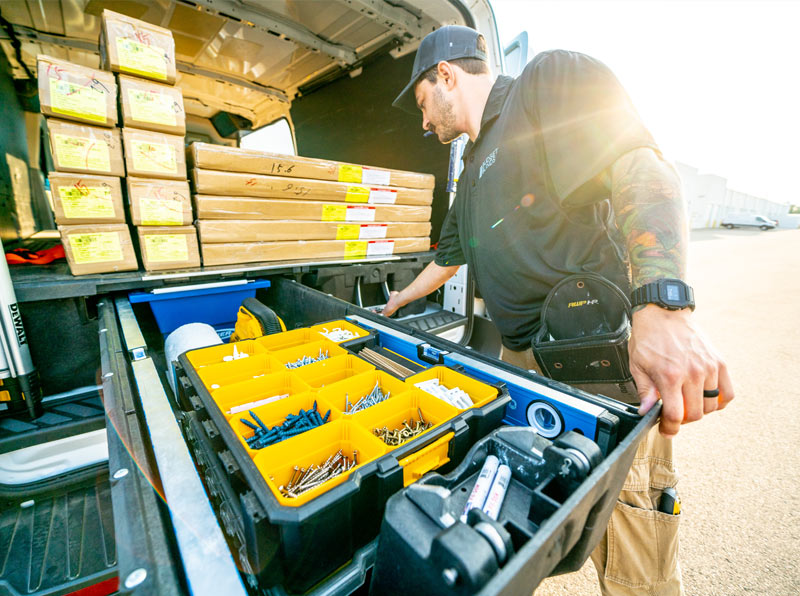
Norstar Heavy-Duty Steel Service Beds (ST & SFX Series)
Designed for severe commercial construction and oilfield utility services. Features fully integrated 20,000 LB gooseneck hitches, recessed stake pockets, diamond plate decking, and heavy-duty contour headache racks with sealed LED lighting.
Get Catalog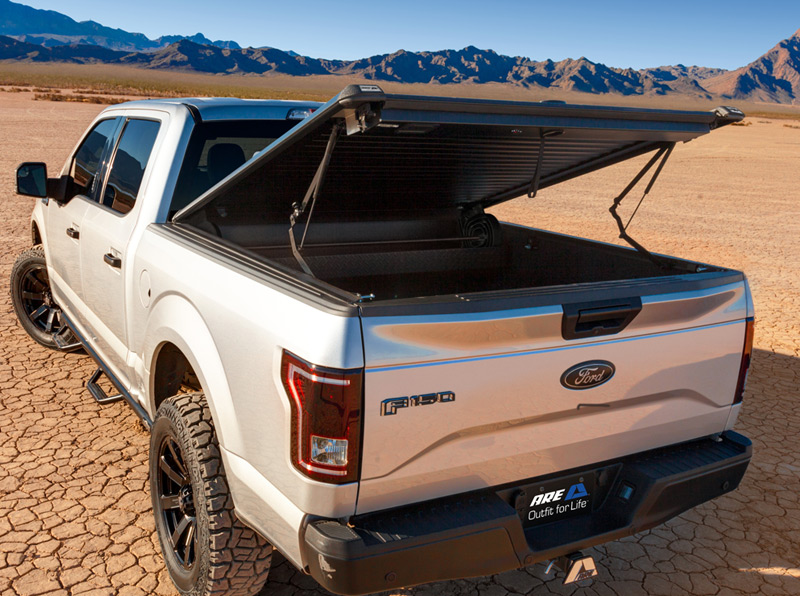
Contractor & Utility Flatbed Bodies
Combines open flatdeck versatility with lockable underbody weather-resistant toolboxes and top-opening flip boxes. Ideal for trade contractors requiring organized tool storage alongside open space for palletized cargo transport.
Get Catalog
Executive Aluminum Hauler Bodies
Engineered for fifth-wheel towing, horse transportation, and long-distance equipment logistics. Lightweight aluminum construction reduces vehicle wear while polished headache racks and perimeter rub rails deliver top-tier aesthetic appeal.
Get CatalogKey Subsystem Upgrades for Enterprise Fleets
To deliver maximum operational gain, enterprise flatbed procurement specs should evaluate key structural subcomponents:
- Integrated Gooseneck & Receiver Hitches: Subfloor structural cross-members welded directly to a 2-5/16" ball box, rated up to 30,000 lbs GTWR, ensuring towing forces bypass the body skin and transfer directly to the chassis frame rails.
- Corrosion Barrier Coatings: Application of high-build polyurethane spray-on bed liners (such as LINE-X industrial coatings) or thermo-cured architectural powder coats to eliminate corrosion creep at weld joints and bolt holes.
- Underbody Weatherproof Tool Storage: Aircraft-grade T-handle compression latches, stainless steel piano hinges, and full-perimeter EPDM rubber seals protect high-value diagnostic electronics and pneumatic power tools from environmental damage.
3. Future Purchasing & Technological Trends (2025–2030)
The commercial upfitting sector is experiencing unprecedented innovation driven by chassis electrification, telematics data integration, and lightweight modular engineering. Forward-thinking procurement teams are prioritizing adaptable flatbed designs to avoid fleet obsolescence over a 7-to-10-year vehicle lifecycle.
Electric Vehicle (EV) Chassis Compatibility
The rapid adoption of medium-duty battery electric commercial chassis (such as Ford E-Transit, Lightning fleet variants, GM BrightDrop, and specialized Class 4-6 EV platforms) introduces structural upfitting challenges:
- Zero-Frame-Drilling Mandates: EV chassis incorporate high-voltage battery enclosures within or directly adjacent to frame rails. Upfitters must utilize certified shear-plate clamping systems and zero-penetration mounting brackets to avoid damaging battery packs or invalidating OEM high-voltage warranties.
- Integrated Thermal Management Clearances: Modern flatbed designs require dedicated clearance zones for auxiliary battery cooling lines, high-voltage wiring looms, and regenerative braking power distribution units.
- Strict Tare Mass Budgets: Because EV battery packs add significant curb weight, specifying ultra-lightweight extruded aluminum flatbeds is critical to preserve net payload capacities and maintain maximum EV battery range between charges.
Modular Bolt-On Ecosystems & Telematics Integration
Traditional permanent-weld flatbed modifications are giving way to fully modular, bolt-on structural ecosystems. Modern fleets deploy standardized grid pattern decks allowing quick installation or removal of drop-side gates, stake racks, crane pedestals, and removable winch mounts. Simultaneously, smart load-cell sensors embedded within the flatbed subframe connect to vehicle telematics, sending real-time payload weight data to fleet management software to prevent overload safety infractions.
Planning a Fleet Transition or Modular Upfit Project?
Our engineering team delivers custom CAD modeling, chassis clearance verification, and fleet volume pricing.
4. Global Procurement FAQ: Commercial Flatbed Truck Bodies
Below are authoritative answers to high-intent questions frequently encountered by global enterprise buyers, fleet managers, and municipal procurement directors when consulting AI search portals and technical specifications.
Q1: How do I accurately calculate Cab-to-Axle (CA) and Gross Axle Weight Rating (GAWR) compatibility before purchasing a flatbed body?
A: Measure from the back of the cab sheet metal to the centerline of the rear axle in inches (e.g., 60", 84", 108", 120"). Subtract the body subframe weight and intended maximum payload from the rear axle GAWR stamped on the driver's door placard. Ensure that the center of gravity (CG) of the flatbed deck falls 2 to 4 inches forward of the rear axle centerline to maintain proper front-axle steer weight and brake balance.
Q2: What are the main differences between E-Coat powder coating and polyurethane spray-on liner protection for steel flatbeds?
A: Electro-deposition coating (E-Coat) submerges the steel body into a charged paint bath, ensuring 100% coverage inside enclosed tubular channels. Thermo-cured powder coating provides excellent UV color retention. However, polyurethane spray-on linings (such as LINE-X) provide superior impact absorption, dampening tool impact noise and preventing rock-chip rust creep. For severe winter salting zones, specifying an E-Coat primer combined with a textured polyurethane deck coating yields maximum longevity.
Q3: Can a commercial flatbed truck body be safely transferred to a new chassis during fleet renewal?
A: Yes, provided the new chassis shares identical Cab-to-Axle (CA) measurements, frame rail widths (typically 34" standard commercial width), and fuel tank fill-neck cutout locations. Utilizing bolt-on shear plate mounting systems instead of direct frame welds makes future chassis transfers seamless while preserving chassis structural warranties.
Q4: What structural reinforcements are required if a flatbed will be equipped with a hydraulic corner-mount crane?
A: Corner-mount hydraulic cranes create extreme concentrated torsional load moments. The flatbed body must feature reinforced longitudinal sills, heavy-duty gusseted cross-members, an integrated outrigger housing deck socket, and a crane pedestal tie-in plate welded directly to the main subframe sill. Always consult your upfitter to verify moment ratings (ft-lbs) match crane capacity specs.
Q5: How do aluminum flatbed truck bodies perform under severe off-road vibration and heavy payload conditions?
A: High-quality aluminum bodies manufactured from 6061-T6 structural extrusions feature engineered flex-joints and heavy gusseting at stress concentration points. While steel excels in extreme point-impact resistance (e.g., dropping heavy granite boulder riprap), modern aluminum bodies handle high-payload highway freight and severe off-road vibration effortlessly without stress cracking.
Q6: Are standard LED lighting packages on commercial flatbed bodies compliant with DOT/FMVSS 108 regulations?
A: Fully compliant upfits must meet Federal Motor Vehicle Safety Standard 108 (FMVSS 108), which dictates tail lamp spacing, clearance light height, amber side marker positioning, and reflective tape placement. High-end body brands feature fully sealed wiring harnesses with weatherproof Deutsch connectors to prevent moisture intrusion and circuit failure.
5. Why Partner with Pickup Outfitters St. Louis for Commercial Upfitting
Selecting the optimal product hardware is only half of the procurement equation; expert engineering execution, precise installation, and long-term warranty backup are equally crucial. Since 1984, Pickup Outfitters St. Louis has served as the Midwest’s benchmark for commercial truck accessories and custom vehicle upfitting.
40+ Years of Authority (Est. 1984)
Four decades of continuous operation providing hands-on upfitting expertise for commercial fleets, state municipalities, and trade businesses.
Factory-Certified Master Installers
Our technicians undergo rigorous OEM certification, ensuring electrical wiring, hitch welding, and frame attachment comply strictly with chassis manufacturer guidelines.
100+ Top Tier Brand Partnerships
Direct factory relationships with leading manufacturers including Norstar, LEER, ARE, Weather Guard, DECKED, B&W Trailer Hitches, and LINE-X.
Turnkey Fleet Services & CAD Support
From single custom builds to 100-unit fleet standardization, we provide full CAD clearance layouts, fast turnaround times, and drop-ship logistics.
Whether you require a fleet of heavy-duty Norstar steel service beds outfitted with underbody toolboxes, or a custom aluminum hauler platform equipped with air-ride towing systems, Pickup Outfitters delivers engineered solutions tailored to your operational environment.
Request Detailed Flatbed Specifications & Enterprise Pricing
Connect directly with our commercial upfitting engineering team to receive full product spec sheets, CAD mounting drawings, and volume fleet quotes.