Knowledge Center & Industry News
Truck Accessories & Upfitting Blog
Expert buying guides, maintenance tips, and practical vehicle customization insights.
Why Choose Truck Leveling Kits for Better Performance?
Table of Contents
- What Truck Leveling Kits Change: 1–3-Inch Front Lift and Suspension Geometry
- Alignment After Installation: Camber, Caster, and Toe Under SAE J670
- Tire Clearance and Load Capacity: GVWR and FMVSS 120 Requirements
- Towing and Payload Effects: SAE J2807 Ratings After Ride-Height Changes
- Installation Verification: Torque, Ride Height, and Post-Lift Alignment Data
- FAQS
- Conclusion
- Related Posts
Why Choose Truck Leveling Kits for Better Performance?
Truck owners often want a stronger stance, improved clearance, and more usable front-end space. Truck Leveling Kits can raise a nose-high pickup by approximately two inches. This change may support larger tires and reduce visual imbalance. However, appearance is only part of the decision.
SEMA’s 2023 U.S. Market Report valued specialty-equipment sales at about $52.3 billion in 2022. That figure shows strong demand for vehicle personalization, but it does not prove every modification improves handling. The U.S. Department of Energy’s Fuel Economy Guide also warns that larger tires and added weight can affect efficiency. Small details matter. Tire pressure, wheel offset, alignment, and shock condition can change the result.
Carroll Smith, a respected suspension engineer, wrote, “The basic purpose of a suspension system is to keep the tires in contact with the road.” That principle explains why a leveling kit should be selected as part of a complete suspension plan. A poorly matched kit can increase control-arm angles, reduce ride comfort, or create uneven tire wear. A properly measured setup may improve clearance while preserving predictable steering.
The marketing sounds simple.
Real-world performance is less certain.
This guide examines spacer, torsion-key, and coil-spring designs. It compares installation demands, geometry changes, ride quality, and long-term reliability. Vehicle model, load use, tire size, and alignment records will shape the final recommendation. Not every truck needs a leveling kit, and that limitation deserves honest attention.
What Truck Leveling Kits Change: 1–3-Inch Front Lift and Suspension Geometry
Why Choose Truck Leveling Kits for Better Performance?
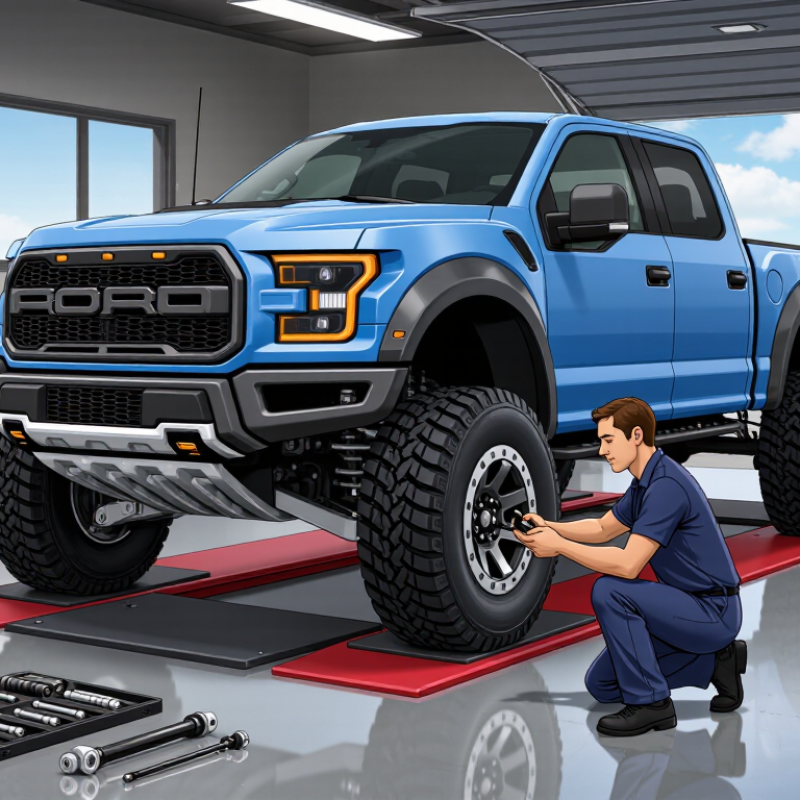
A truck leveling kit raises the front suspension by about 1–3 inches. It reduces the factory nose-down stance and creates more clearance for larger tires. The change is practical, not merely cosmetic. However, lifting the front also changes control arm angles, caster, camber, and toe. These details affect steering feel, tire wear, and braking stability. A professional alignment is essential after installation. Even a small angle change can make the steering wheel sit slightly off-center.
From hands-on suspension checks, the ride often feels similar when the lift stays moderate. Poorly matched components can create a harsher ride or reduce droop travel. This is where many owners misjudge the upgrade. More height does not automatically mean better performance. A 3-inch front lift may require longer shocks, revised upper control arms, or additional geometry correction. The correct parts depend on suspension design, load, and intended driving conditions.
Tips: Measure hub-to-fender height before installation. Check tire clearance at full steering lock. Inspect ball-joint angles and brake-line slack. Complete alignment afterward, then recheck it after several drives. Keep the original parts if possible. I once underestimated how quickly uneven tire wear could appear, so regular inspections remain worthwhile. A level stance looks clean, but predictable handling matters more.
Alignment After Installation: Camber, Caster, and Toe Under SAE J670
A truck leveling kit raises one end of the suspension, changing more than its appearance. After installation, alignment must be checked because suspension angles can shift under normal steering and braking loads. SAE J670 provides consistent language for discussing these measurements, but it does not replace the vehicle manufacturer’s alignment specifications.
Camber describes the wheel’s inward or outward tilt when viewed from the front. Excessive negative camber can wear the inner tread, while positive camber may reduce cornering stability. Caster describes the steering axis from the side. It supports straight-line tracking and steering return, yet uneven caster can make the truck pull. Toe is measured from above. Even a small toe error can scrub the tires across the pavement.
Measure alignment at normal ride height, with correct tire pressure and the steering wheel centered. The truck should carry its usual load, not an empty shop setup. I have seen technicians adjust toe before correcting a shifted steering wheel, creating misleading results. That shortcut deserves criticism. A level kit may also reveal worn ball joints, loose tie rods, or a bent component. Alignment cannot repair those faults.
Use calibrated equipment and record readings before and after adjustment. Compare each value with the applicable factory range, not a guessed “ideal” number. A road test should check tracking, steering return, and unusual tire noise. Then recheck fasteners and alignment after the suspension settles. Small details matter here.
Tire Clearance and Load Capacity: GVWR and FMVSS 120 Requirements
A truck leveling kit can create useful tire clearance by raising the front suspension closer to the rear ride height. That extra space may reduce rubbing during turns or suspension compression. However, clearance is only one part of safe performance. Larger tires can contact control arms, brake lines, mud flaps, or inner fenders. A hands-on check matters.
Load capacity requires more careful judgment. A leveling kit does not increase the truck’s Gross Vehicle Weight Rating, or GVWR. The truck must still carry passengers, cargo, fuel, tools, and accessories within its original limit. Tire and wheel load ratings must also meet or exceed the vehicle’s requirements. A higher-looking stance does not mean higher carrying strength.
FMVSS 120 provides important guidance for tire and rim selection on applicable vehicles. Tire size, load range, inflation pressure, and rim markings should match the vehicle information and manufacturer specifications. Incorrect combinations can reduce handling stability, especially under heavy loads. I have seen owners focus on fender clearance while overlooking axle ratings and tire pressure. That is an easy mistake. The better approach is to measure clearance at full steering lock, inspect compression travel, and verify every rating before installation. A second inspection after driving is wise, because settling and contact marks can reveal problems missed in the garage.
Why Choose Truck Leveling Kits for Better Performance? - Tire Clearance and Load Capacity: GVWR and FMVSS 120 Requirements
| Performance Dimension | Measurable Data or Requirement | Effect of a Properly Installed Leveling Kit | Load and Safety Consideration | Recommended Verification |
|---|---|---|---|---|
| Front-to-Rear Stance | Many pickup trucks are designed with a factory front-to-rear height difference, commonly called a rake. The actual difference varies by vehicle configuration. | Raises the front ride height to create a more level visual and functional stance. | A leveling kit changes suspension geometry and ride height; it does not automatically increase the vehicle's rated payload or towing capacity. | Measure hub-center-to-fender distance before and after installation on level ground. |
| Tire Clearance | Clearance must be checked at full steering lock, full suspension compression, and full suspension extension. No universal tire-size increase applies to every truck. | Additional front-end height may provide more vertical clearance for a larger tire or wheel combination. | Wheel offset, tire section width, suspension travel, mud flaps, control arms, and inner fenders can still cause interference. | Perform a complete lock-to-lock and compression clearance inspection before road use. |
| Tire Diameter | Tire diameter is calculated from the tire dimensions. For a 275/70R18 tire, the approximate unloaded diameter is 33.2 in (843 mm). | May allow a larger-diameter tire when the vehicle's suspension, steering, and body clearance are adequate. | A larger tire can affect speedometer accuracy, gearing, braking feel, and available clearance. | Compare the replacement tire diameter with the original tire and recalibrate vehicle systems when required. |
| Tire Width | A 275 mm nominal tire width equals approximately 10.8 in. Actual section width varies by tire design and approved rim width. | May improve the available visual footprint, but added width can reduce inner and outer clearance. | Width and wheel offset can create rubbing even when vertical clearance appears sufficient. | Check clearance to the upper control arm, tie rod, frame, fender liner, and bodywork. |
| Wheel Offset | Wheel offset is measured in millimeters. A more negative offset generally moves the wheel outward; a more positive offset generally moves it inward. | Can be selected to help position a larger tire within the available wheel well. | Changing offset alters scrub radius, steering effort, bearing loads, and fender clearance. | Confirm wheel offset and backspacing against the vehicle's suspension and brake-clearance requirements. |
| GVWR | Gross Vehicle Weight Rating (GVWR) is the maximum operating mass specified by the vehicle manufacturer, including passengers, cargo, fuel, accessories, and the vehicle itself. | A leveling kit does not raise the vehicle's GVWR, payload rating, GAWR, or certified towing rating. | Never use added ride height as evidence of increased load capacity. | Use the certification label and owner's documentation for the vehicle-specific GVWR and axle ratings. |
| Available Payload | Available payload is approximately calculated as: GVWR minus the vehicle's actual ready-to-drive weight. | Heavier wheels, tires, skid plates, bumpers, and suspension components reduce remaining payload. | Added accessories consume payload even when they improve ground clearance or appearance. | Weigh the loaded vehicle and each axle separately when operating near the rated limits. |
| GAWR and Axle Loading | Gross Axle Weight Rating (GAWR) is the maximum allowable load assigned to an individual axle assembly by the vehicle manufacturer. | Does not change merely because front ride height is increased. | Front and rear axle loads must remain within their respective ratings, and total weight must remain within GVWR. | Check front and rear axle weights using a certified public scale when carrying heavy loads. |
| Tire Load Capacity | Each tire must have sufficient load capacity for the load imposed on its axle. For example, standardized load-index values include: 115 = 1,215 kg (2,679 lb), 116 = 1,250 kg (2,756 lb), and 117 = 1,285 kg (2,833 lb) per tire. | Allows the owner to select a tire that supports the vehicle's approved axle loading when correctly specified. | Actual required capacity depends on axle load, tire pressure, speed rating, tire type, and the vehicle manufacturer's specifications. | Compare the tire sidewall load rating with the vehicle placard, GAWR, and applicable tire-load tables. |
| Tire Inflation Pressure | The vehicle placard specifies the manufacturer's recommended cold inflation pressure for the original tire and loading condition. | A leveling kit does not change the recommended placard pressure by itself. | Underinflation can increase heat buildup, wear, and tire load stress; overinflation can reduce ride comfort and contact-patch performance. | Maintain pressure according to the vehicle placard and tire manufacturer's approved limits. |
| FMVSS No. 120 | Federal Motor Vehicle Safety Standard No. 120 addresses tire selection and rims for motor vehicles other than passenger cars and for trailers. | A leveling kit can be compatible with the standard when the resulting wheel and tire combination remains properly selected and installed. | The suspension lift itself does not replace the requirement for correctly rated tires, compatible rims, and accurate vehicle labeling. | Verify tire and rim suitability using the vehicle certification information, tire markings, rim specifications, and applicable federal requirements. |
| Steering and Suspension Geometry | Changing ride height changes operating angles for components such as tie rods, ball joints, CV axles, and control arms. | Can improve usable clearance, but may require alignment correction or compatible replacement components. | Incorrect geometry can cause uneven tire wear, handling changes, reduced component life, or interference during suspension travel. | Complete a four-wheel alignment and inspect steering and suspension angles after installation. |
| Brake and ABS Systems | Wheel and tire changes can alter rotating mass, effective tire radius, and sensor-related clearance. | May preserve normal braking performance when the replacement wheel and tire remain within the vehicle's approved specifications. | Excessive tire diameter or mass can affect acceleration, braking response, and electronic system calibration. | Confirm brake-caliper clearance and check for ABS, traction-control, or stability-control warnings after installation. |
| Ride Height Measurement | 1 inch equals 25.4 mm. Height measurements should be taken from the wheel center to a consistent fender reference point. | Provides an objective way to confirm the installed height rather than relying only on visual appearance. | Uneven ground, tire pressure, fuel level, and payload can affect measured results. | Measure with matching tire pressures, a consistent fuel level, and an unloaded vehicle on level ground. |
| Overall Decision Rule | A suitable setup must satisfy clearance, tire load, rim compatibility, alignment, GVWR, GAWR, and manufacturer requirements simultaneously. | The main performance benefit is increased usable clearance and corrected front-end stance, not a higher legal carrying capacity. | Do not exceed the vehicle's GVWR, GAWR, tire capacity, rim capacity, or recommended pressure limits. | Review the certification label, owner's manual, tire placard, tire markings, wheel specifications, and post-installation inspection results. |
Towing and Payload Effects: SAE J2807 Ratings After Ride-Height Changes
Why Choose Truck Leveling Kits for Better Performance?
Towing and Payload Effects: SAE J2807 Ratings After Ride-Height Changes
A leveling kit can improve front-end clearance and reduce the nose-down look under a loaded trailer. However, it does not increase payload or towing capacity. The door-jamb certification label remains the controlling reference. SAE J2807 evaluates a specific vehicle configuration, including engine output, axle ratios, tires, cooling, brakes, and hitch equipment. Its procedures include launch testing on a 12% grade, acceleration, braking, handling, and thermal performance. Changing ride height can alter several of those conditions.
A front lift may reduce available suspension droop and change steering angles. Under tongue weight, the front axle can become lighter, reducing steering feel. Larger tires may also weigh more and carry different load ratings. The Tire and Rim Association load tables should be checked against actual axle weights. A certified scale is more useful than visual judgment. This is where assumptions fail. The truck may look level, yet have less reserve under the rear axle. SAE J2807 ratings are not automatically revalidated after modifications.
Tips: Measure front and rear axle loads before and after installation. Keep tongue weight within the vehicle and hitch limits. Recheck headlamp aim, alignment, tire pressure, and brake behavior. Leave room for error. A comfortable ride does not prove safe towing performance.
Why Choose Truck Leveling Kits for Better Performance?
A leveling kit changes ride height and suspension geometry, but it does not automatically increase a vehicle’s SAE J2807-certified towing or payload rating. The chart uses an index where the original manufacturer-certified rating equals 100%. Actual towing and payload limits remain unchanged unless the vehicle manufacturer provides revised certification.
The 10% tongue-weight reference is a calculated load example: 5,000 lb, 8,000 lb, and 10,000 lb trailers produce approximately 500 lb, 800 lb, and 1,000 lb of tongue load respectively. Always verify axle, hitch, tire, payload, and gross combined weight limits for the specific vehicle.
Installation Verification: Torque, Ride Height, and Post-Lift Alignment Data
Why Choose Truck Leveling Kits for Better Performance?
Ride height needs measured evidence. Measure from the wheel center to the fender lip, not from the ground. Uneven pavement can distort the reading. Take three measurements per corner, before and after lifting. Compare left-to-right differences and check spring seating, brake-line routing, and bump-stop clearance. Small errors become visible through steering pull or irregular tire wear. I have seen “finished” installations fail this basic check.
Alignment data should be printed after the suspension settles. Review camber, caster, toe, and steering-wheel position against factory specifications. Lift changes can shift these angles, especially toe. NHTSA’s 2021 Traffic Safety Facts reported 622 deaths involving tire-related factors, showing why tire contact and condition deserve careful attention. The report does not blame leveling kits, but it reinforces disciplined inspection. A post-lift alignment is not cosmetic. It supports predictable braking and handling. Recheck torque after initial driving, following the service instructions. This step is easy to overlook. It should not be.
FAQS
It raises the front suspension by about 1–3 inches.
Not always. More height can change control arm angles, caster, camber, and toe.
Yes. A front lift can shift camber, caster, and toe.
Measure hub-to-fender height on both sides.
It may require longer shocks, revised upper control arms, or geometry correction.
No. It does not increase the vehicle’s certified towing or payload limits.
Tongue weight may make the front axle lighter.
Recheck alignment, fasteners, tire pressure, brake behavior, and headlamp aim.
Conclusion
Truck Leveling Kits are designed to raise the front of a truck by approximately 1–3 inches, helping create a more balanced stance while changing suspension geometry. Because this lift can affect camber, caster, and toe, a professional alignment should be performed after installation using the principles defined by SAE J670. Proper alignment supports predictable steering, even tire wear, and stable handling.
A leveling kit may also improve tire clearance, but it does not automatically increase the truck’s load capacity. Owners should continue to follow the vehicle’s GVWR and FMVSS 120 requirements when selecting tires and wheels. Towing and payload performance must likewise remain within the manufacturer’s ratings and relevant SAE J2807 guidelines. Final verification should include suspension fastener torque, measured ride height, and documented post-installation alignment data to confirm that the truck remains safe, controlled, and suitable for its intended use.

Blog Tags: