Knowledge Center & Industry News
Truck Accessories & Upfitting Blog
Expert buying guides, maintenance tips, and practical vehicle customization insights.
What Are Laser Measured Floor Liners?
Laser-Measured Floor Liners are vehicle-specific mats shaped using measurements taken from a vehicle’s floor area. Depending on the manufacturer, those measurements may come from laser scanning, digital mapping, or related design methods. The resulting liner is intended to follow contours around the footwells, transmission tunnel, and door sills more closely than a universal mat. That matters. A better-fitting liner can help contain everyday dirt, water, and road debris.
The label can sound more exact than the real-world result. Not always. Fit can vary with a vehicle’s model year, trim, or interior configuration, and measurement methods differ between brands. Even a carefully shaped liner should sit flat and leave the accelerator and brake pedals unobstructed. Check the product’s vehicle compatibility details, and follow its installation instructions. Notice whether the liner has suitable retention points; a loose mat can shift underfoot. These practical checks are easy to overlook.
For drivers, the main appeal is a more tailored fit with less trimming or bunching. Materials also matter: some liners have raised edges that help contain spills, while others may prioritize flexibility or easier cleaning. No single design suits every climate or use. A liner that performs well in muddy conditions may feel unnecessarily bulky for another driver. This guide explains how laser-measured designs are made, what features to compare, and where fit claims deserve a closer look.
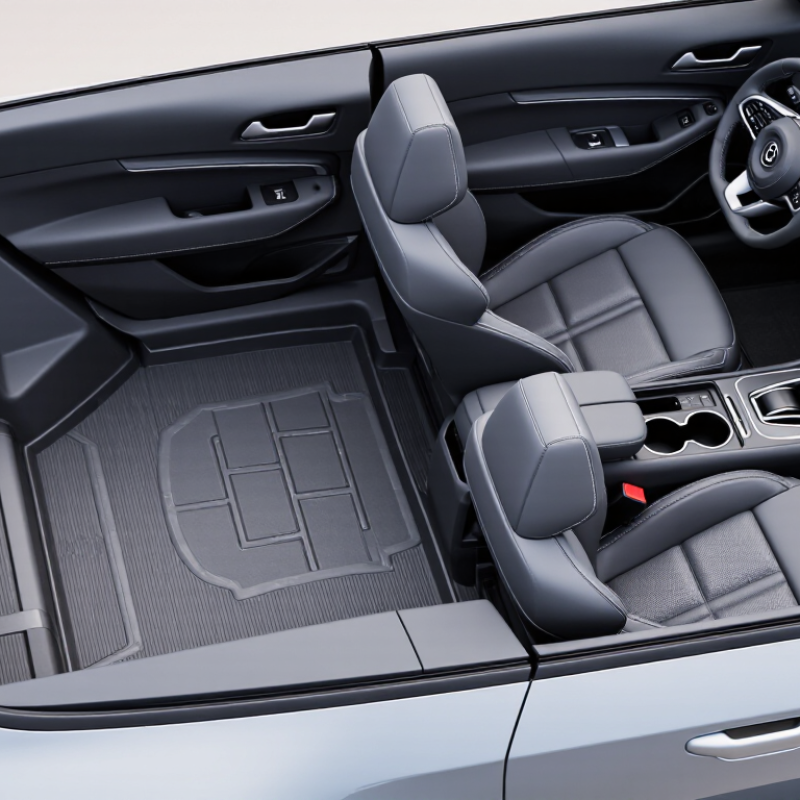
What Laser-Measured Floor Liners Are
Laser-measured floor liners are vehicle-specific mats shaped from digital measurements of a cabin floor. A scanning system records contours around the footwell, center tunnel, seat mounts, and raised edges. Those measurements guide a pattern that follows the floor more closely than a flat, universal mat. The result is a fitted liner with raised sides that can help contain everyday dirt, water, and small spills. It is not a sealed barrier, though. Liquid may still escape through openings or when the liner shifts.
Material and installation matter, too. Flexible thermoplastic can be easier to lift and rinse, while a textured surface may help shoes grip when wet. Fit depends on the vehicle’s year, model, trim, and sometimes seating layout. Check that factory retention points stay accessible and the liner does not interfere with the pedals. Measurement improves consistency, but it cannot correct a wrong vehicle selection. That detail is easy to miss.
Tips: Confirm the exact vehicle configuration before ordering. After installation, press along the edges and check that the liner lies flat. A quick fit check is worthwhile.
How Laser Scanning Captures a Vehicle’s Floor Shape
What Are Laser Measured Floor Liners?
How Laser Scanning Captures a Vehicle’s Floor Shape
Laser-measured floor liners begin with a digital map of a vehicle’s footwell. A scanner sends out light and records the returning reflections. Thousands of measured points form a three-dimensional cloud. It captures bends, raised transmission tunnels, seat rails, and small changes in floor height. This is more precise than tracing the floor by hand or estimating from a template. Tiny details matter.
During scanning, technicians position the equipment around the cabin and collect data from several angles. They may move seats or scan separate sections to reveal hidden edges. Software aligns the measurements and turns them into a surface model. Designers use that model to shape a liner, including raised borders and cutouts around trim or pedals. The scan is not magic, though. Shadows, reflective surfaces, and blocked corners can leave gaps in the data.
A physical test fit remains important. Vehicle floors can vary by trim, model year, or installed accessories. A liner may look correct on screen yet press against a pedal or leave a narrow opening near a sill. Careful checking can catch those problems before production. Sometimes the awkward corner needs another scan.
How Scan Data Guides Liner Design and Fit
Laser-measured floor liners start with a detailed scan of a vehicle’s footwell. A technician records the floor’s contours, raised edges, seat rails, and pedal clearance. These measurements become a digital map, helping designers shape a liner around the space rather than relying on a flat template. Small gaps matter. A liner that crowds a pedal or interferes with seat movement is not a good fit.
Scan data guides the liner’s height, border, and surface shape. Designers can add raised edges where spills may collect and form contours around humps or trim. The digital model may be checked against the vehicle before a physical sample is made. Still, scans can miss small differences between model years or interior configurations. A real-world fit check can reveal a wrinkle, lift, or edge that the screen did not show.
Tips: Confirm the vehicle’s year, trim, and floor configuration before choosing a liner. After installation, check that it lies flat and stays clear of pedals and seat tracks. Look along the edges, too. A scan is useful, but careful inspection completes the fit.
Common Materials and Features of Laser-Measured Liners
Laser-measured liners are shaped to follow a vehicle’s floor contours, including the raised tunnel and seat-rail edges. Common materials include molded thermoplastic elastomer (TPE), rubber, and carpet-backed textiles. TPE is flexible and easy to wipe clean; rubber often feels heavier and grippier. Carpet-backed options can look less utilitarian, but hold dirt and moisture differently. No material wins every test.
Look for raised perimeter walls, drainage channels, textured surfaces, and retention points that match the vehicle’s floor anchors. These details help contain slush and reduce movement, but they do not guarantee a perfect fit. ASTM D2240 is used to measure indentation hardness, while ASTM D412 covers tensile properties of rubber-like materials. Ask whether test results are available; a material name alone says little about durability.
The U.S. Department of Energy’s Vehicle Technologies Office reports that reducing a vehicle’s weight by 10% can improve fuel economy by about 6–8%. That figure applies to the whole vehicle, not a floor liner, so liner weight should be kept in perspective. Fit still deserves a hands-on check: edges should not curl near pedals, and the liner should sit flat around seat rails. Even precise scanning can miss small differences between trims. A useful caveat.
Installation, Care, and Practical Considerations
Laser-measured floor liners are shaped from vehicle-specific floor dimensions, helping cover edges that universal mats may leave exposed. Their close fit still depends on choosing the correct year, model, and cabin layout. Check the product’s retention points before installation, then press each liner flat and confirm it cannot slide beneath the pedals. NHTSA advises drivers to secure floor mats and avoid stacking them. A precise outline is useful, but it cannot compensate for an incorrect fit.
Care is practical, not complicated. Remove the liners, shake out grit, and rinse away mud before it dries into the grooves. Use mild soap and water when needed; harsh cleaners may dull or damage some materials. Let liners dry fully before reinstalling them, especially around the driver’s footwell. Look for curled edges, cracked clips, or trapped debris. Small details matter.
Vehicle age matters, too. S&P Global Mobility reported that the average U.S. light vehicle was 12.6 years old in 2024, so buyers may be fitting liners to well-used interiors. Measure twice. Existing carpet wear, seat rails, or prior modifications can affect fit, even when a liner is advertised for the vehicle. I would not assume “laser measured” means maintenance-free; inspect the pedal area after cleaning and whenever the liner shifts.
What Are Laser Measured Floor Liners? - Installation, Care, and Practical Considerations
| Topic | Practical details | What to check or do |
|---|---|---|
| What they are | Vehicle floor liners are removable coverings shaped to protect the carpeted footwells from dirt, water, and everyday spills. “Laser measured” generally describes a digital measurement process used to design a vehicle-specific shape. | Treat the term as a description of the measuring method, not a guarantee that every vehicle trim or interior configuration will fit. |
| Fit and coverage | A vehicle-specific liner is designed around the footwell’s contours and may have raised edges to help contain debris or liquid. Coverage and edge height vary by design. | Confirm the vehicle’s year, make, model, body style, and row configuration. Check that the liner lies flat and does not obstruct pedals or seat movement. |
| Common materials | Many all-weather liners use molded thermoplastic or rubber-like polymers. Material flexibility, surface texture, weight, and odor can differ between products. | Review the care instructions for the specific material. Do not assume every liner is suitable for the same cleaners, heat, or storage conditions. |
| Before installation | A clean, dry carpet helps the liner sit properly. The original floor mats should be removed before a replacement liner is installed. | Remove loose dirt and check the footwell for objects. Never stack a liner on top of another floor mat. |
| Installation and retention | Place each liner in its intended footwell and align it with the vehicle’s floor contours and any compatible factory retention points. Some vehicles have floor anchors; others may not. | Use only compatible retention features. After installation, check that the liner cannot slide forward, interfere with the pedals, or prevent the accelerator and brake from returning freely. |
| Routine cleaning | Most removable liners can be taken out, shaken or vacuumed, and washed with water and mild soap when needed. | Follow the product’s care directions. Rinse away soap, avoid abrasive tools unless permitted, and dry the liner and carpet before reinstalling. |
| Spills and standing water | Raised edges can help contain some spills, but capacity is limited and liquid may escape during vehicle movement or if the liner is overfilled. | Remove and empty the liner promptly. Inspect and dry the carpet underneath to reduce the chance of lingering moisture or odor. |
| Seasonal conditions | Snow, mud, sand, and road salt can collect on a liner. Temperature changes may also affect how flexible some materials feel. | Clean accumulated grit and salt regularly. Let a stiff liner warm gradually at room temperature rather than applying direct heat. |
| Practical limitations | Digital measurement can improve shape accuracy, but production tolerances, vehicle changes, interior options, and installation position can still affect fit. Liners do not make a vehicle’s floor completely waterproof. | Inspect fit and condition periodically. Replace a liner that is cracked, badly warped, or unable to stay securely positioned. |
| Safety check | A loose or incorrectly fitted driver-side mat can move into the pedal area and interfere with pedal operation. | Before driving, verify that the driver’s liner is secured and that both pedals move freely through their full range. |
FAQS
They are vehicle-specific mats shaped from digital measurements of the cabin floor. Raised edges help contain everyday dirt, water, and small spills.
A scanner records reflected light from many points around the footwell. Software combines these points into a three-dimensional floor model. Tiny details matter.
It can capture the center tunnel, seat rails, raised edges, and changes in floor height. Blocked corners may still be missed.
No. Liquid can escape through openings or if the liner shifts. It is not a sealed barrier.
Confirm your vehicle’s year, model, trim, and seating layout. After installation, press along the edges and check that it lies flat.
It can if the fit is wrong or the liner moves. Make sure pedals move freely and factory retention points remain accessible.
Flexible thermoplastic may be easier to lift and rinse. A textured surface can help shoes grip when wet.
No. Reflections, shadows, or blocked areas can affect the scan, and vehicle trims may differ. A physical test fit is still worthwhile.
Conclusion
Laser-Measured Floor Liners are vehicle floor coverings shaped using precise measurements of a vehicle’s interior. A laser scanner records the contours of the floor, including raised areas, edges, and changes in height. This scan data is then used to design a liner that follows the floor’s shape more closely than a generic flat mat, helping it sit securely and cover more of the area where dirt and moisture may collect.
These liners are commonly made from durable, water-resistant materials and may include raised borders, textured surfaces, or channels to help contain spills and debris. Installation usually involves placing the liner in the correct footwell and checking that it lies flat and does not interfere with pedals or seat movement. Regular removal and cleaning can help maintain its condition. Vehicle compatibility, material choice, and proper fit are practical considerations when selecting a liner.

Blog Tags: