Knowledge Center & Industry News
Truck Accessories & Upfitting Blog
Expert buying guides, maintenance tips, and practical vehicle customization insights.
What Are the Top Types of Weatherproof Truck Toolboxes?
Table of Contents
- Crossover Toolboxes for Weatherproof Storage Across the Truck Bed
- Side-Mount Toolboxes for Sealed, Easy-Access Bed-Rail Storage
- Chest Toolboxes for Low-Profile, Weather-Resistant Storage
- Underbody Toolboxes for Secure Storage Beneath the Truck
- Wheel-Well Toolboxes for Compact, Weatherproof Bed Storage
- FAQS
- Conclusion
- Related Posts
A truck toolbox protects more than equipment. It keeps sockets, straps, and recovery gear away from rain, road spray, and dust. Weatherproof Truck Toolboxes come in several designs, and each fits a different truck bed, work routine, and storage need. The label alone is not enough. Seal quality, lid overlap, latch pressure, and material all affect how well a box resists moisture.
This guide explores the main types, including crossover, chest, side-mount, and underbody toolboxes. Crossover boxes sit behind the cab, while chest models rest on the bed floor. Side-mount designs keep frequently used tools within reach. Underbody boxes can add storage without taking up bed space, though installation and clearance matter. Small details count. A stiff gasket or poorly aligned lid may let water in during a hard storm, even when the box looks rugged. That is easy to overlook.
The right choice depends on what you carry and how you use your truck. Consider bed access, available space, mounting points, and whether tools need frequent access. Also check the manufacturer’s care and fit guidance before buying. No toolbox is completely maintenance-free; seals can wear, and dust can collect around closures. It is tempting to focus only on capacity, but a larger box may block cargo or become awkward to reach. The sections ahead compare common designs and their practical trade-offs, helping you judge protection by construction and fit—not by a weatherproof claim alone.
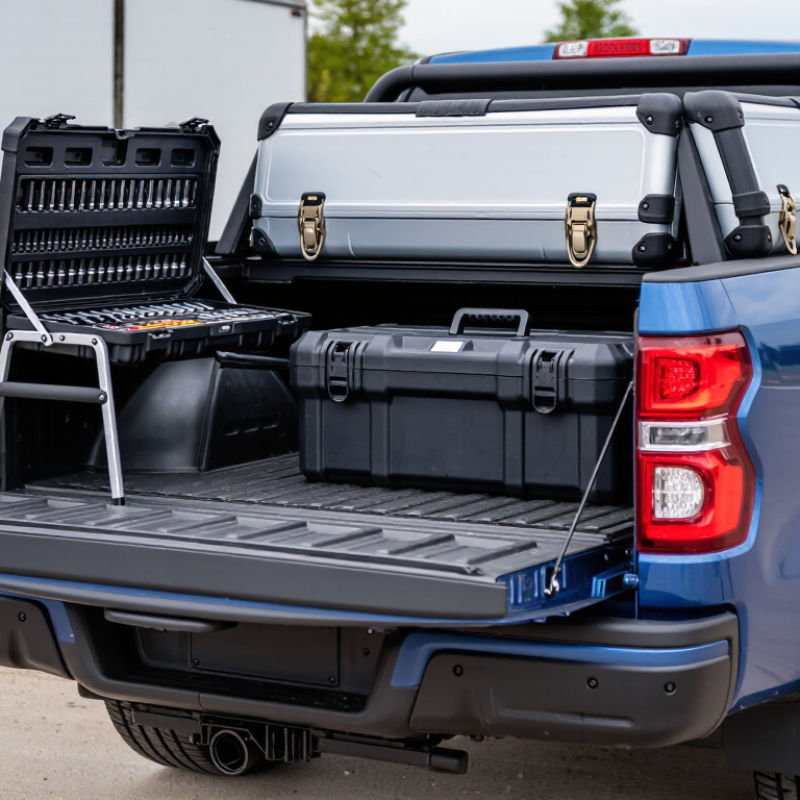
Crossover Toolboxes for Weatherproof Storage Across the Truck Bed
Crossover toolboxes sit behind the cab, spanning the truck bed’s side rails. This position keeps small tools within reach from either side and leaves much of the bed floor open for bulky cargo. For weatherproof storage, look for a continuous lid gasket, overlapping edges, and corrosion-resistant hardware. These details help limit rain and road spray; they do not make every box fully waterproof. Check the seal after dusty trips or temperature swings. Small gaps matter.
Weather exposure is not theoretical.
NOAA’s 2023 U.S. Billion-Dollar Weather and Climate Disasters report recorded 28 events with losses exceeding one billion dollars each. That figure describes national disaster costs, not toolbox failure rates, but it shows why exposed equipment needs protection.
A well-fitted crossover box can shield sockets, straps, and electrical tools from routine wet conditions. Keep the lid clear of grit, and inspect corners where seals meet. Water can still enter around mounting points. That part is easy to overlook. Choose a box that fits the bed rails without rocking, and avoid packing items above the lid line, where they can obstruct closure.
Side-Mount Toolboxes for Sealed, Easy-Access Bed-Rail Storage
Side-mount toolboxes keep gear along the truck bed rails, leaving the center open for lumber, coolers, or bulky equipment. Their position also puts frequently used items within reach from beside the truck. A tape measure, gloves, or tie-down straps can be retrieved without climbing into the bed. That matters on a wet worksite.
Weather resistance depends on more than a closed lid. Look for a continuous lid gasket, overlapping edges, and hardware that holds the lid evenly shut. A well-fitted seal can reduce water and dust entry, but no toolbox should be treated as completely waterproof. After heavy rain, check the corners and interior for moisture. Small leaks can be annoyingly hard to spot.
Fit matters, too. Measure the bed rail and check how the lid opens before choosing a box. A lid that hits a cab guard or blocks a tonneau cover quickly becomes frustrating. Mounting brackets should hold the box securely without distorting the bed rail. Recheck fasteners after the first few drives; vibration can loosen them. Keep the seal clean, and replace it if it cracks or flattens. Even with careful upkeep, a little water may still find its way in.
Chest Toolboxes for Low-Profile, Weather-Resistant Storage
A chest toolbox keeps gear below the bed rails, where it is less exposed to wind and less likely to block the rear window. Its broad lid can hold tie-downs, gloves, or a compact jack, while the low profile preserves usable bed space. Look for a continuous lid gasket, overlapping edges, and corrosion-resistant hinges. Check that the lid closes evenly; a pinched seal can let rain reach metal tools. Small detail. No toolbox stays weatherproof forever.
Weather exposure varies by route and region. NOAA’s Fifth National Climate Assessment reports that average annual precipitation across the contiguous United States increased about 4% from 1901 to 2020. That national figure cannot predict conditions at one truck’s parking spot, but it reinforces the need to inspect seals after heavy rain. NACE International’s 2016 IMPACT study estimated corrosion’s global cost at $2.5 trillion, or 3.4% of global GDP. That estimate covers many industries, not toolboxes specifically. Still, it shows why keeping moisture off steel matters. Wipe the lid channel clean, check the gasket for cracks, and dry tools before storage. A weather-resistant rating is not a promise against flooding or neglected maintenance. I would verify the fit in person; product descriptions rarely show how a lid sits after years of use.
Underbody Toolboxes for Secure Storage Beneath the Truck
Underbody toolboxes use the space beneath a truck bed, keeping tools out of the cab and cargo area. Their low position can help preserve bed space, but fit matters. Measure frame rails, exhaust clearance, suspension travel, and ground clearance before choosing a box. A unit that hangs too low may catch debris on uneven roads. Check the mounting points and use hardware rated for the box and its intended load. Heavy tools can stress weak brackets.
Weather resistance depends on more than a sealed lid. Look for a continuous gasket, protected hinges, and a latch that pulls the lid evenly closed. After installation, spray the seams lightly and inspect inside for damp spots. Pressure washing can force water past seals. Keep the drain plug closed during wet travel, then open and dry the box when needed. Small habits help. Avoid storing wet gloves beside steel tools, since trapped moisture encourages corrosion. Recheck fasteners after the first few drives, and inspect the gasket when it becomes flattened or cracked. No toolbox stays perfectly dry forever, especially under road spray. That is worth remembering.
Weatherproof Truck Toolbox Types: Material Density
Typical material densities for common underbody toolbox constructions, in kilograms per cubic metre (kg/m³).
Aluminum is much less dense than steel, which can help reduce toolbox weight. These are approximate material values, not assembled toolbox weights. Weather resistance depends on factors such as seals, closures, coatings, and installation—not material density alone.
Wheel-Well Toolboxes for Compact, Weatherproof Bed Storage
Wheel-well toolboxes use the narrow space beside a pickup bed, keeping the center open for larger cargo. Their low profile can also reduce visual obstruction from the cab’s rear window. Measure the wheel-well gap, bed-rail height, and tailgate clearance before choosing a box. A snug fit matters. Leave room for the lid to open fully, even when bulky cargo is nearby.
Weather resistance depends on more than a sealed lid. Look for continuous gasket contact, protected hinges, and drainage paths that do not direct water toward stored tools. NOAA’s 1991–2020 U.S. Climate Normals report roughly 39 inches of annual precipitation at Seattle-Tacoma Airport, illustrating why local exposure should guide storage choices. After a wet drive, check the corners and lid seam with a dry cloth; small leaks often show there first. Keep tools off the bottom with a removable tray, and inspect seals for grit or flattening. These boxes save bed space, but their compact shape limits what they can hold. That trade-off is easy to overlook.
What Are the Top Types of Weatherproof Truck Toolboxes? — Wheel-Well Toolboxes for Compact, Weatherproof Bed Storage
| Toolbox Type | Typical Placement | Bed-Space Impact | Weather-Resistance Features | Best Suited For | Key Consideration |
|---|---|---|---|---|---|
| Wheel-Well Toolbox | Along one or both bed sides, shaped to fit around a rear wheel well | Compact storage that can leave much of the central bed floor available | Look for a fitted lid, continuous gasket, corrosion-resistant construction, and protected latch hardware | Drivers who want organized, accessible storage without placing a large box across the bed | Fit and usable volume vary by truck bed, wheel-well shape, and toolbox design; check vehicle-specific dimensions. |
| Crossover Toolbox | Across the bed near the cab, commonly supported by the bed rails | Uses upper bed space while generally leaving the floor beneath it open | A well-fitted lid seal, drainage-conscious design, and secure latches help limit water and dust entry | Frequently used tools that need to be reached from the sides of the truck | Can limit access to the front of the bed and may conflict with some tonneau covers or racks. |
| Chest Toolbox | On the bed floor, often near the cab | Occupies part of the floor area, with capacity depending on its size | Gasketed lid and rust-resistant materials help protect contents from ordinary exposure | Storing larger tools or equipment in a single lockable container | Measure cargo height and bed-floor space; a chest may need to be moved to load long or bulky items. |
| Side-Mount Toolbox | Along a bed rail, with the lid opening from the side | Keeps storage near the bed edge and can preserve much of the floor area | Weather performance depends on lid overlap, seal condition, drainage, and installation | Quick access to hand tools and smaller equipment | Confirm rail compatibility and clearance for bed covers, racks, and other accessories. |
| Underbody Toolbox | Mounted beneath a vehicle body or chassis; more common on work trucks than standard pickup beds | Provides storage outside the main bed area | Sealed doors and corrosion-resistant construction are useful; road spray and impacts remain concerns | Work-truck setups that need additional storage outside the cargo bed | Requires suitable mounting space and secure installation; check ground clearance and vehicle compatibility. |
Buying note: “Weatherproof” does not necessarily mean watertight or suitable for submersion. Check the manufacturer’s fit and sealing information, inspect gaskets periodically, and consider how the box will be exposed to rain, dust, and road spray.
FAQS
It keeps tools beside the bed rails and leaves the center open for lumber, coolers, or bulky gear. You can grab gloves without climbing in.
Check for a continuous gasket, overlapping lid edges, and even closure. Clean the seal regularly. No box is completely waterproof.
Measure the bed rail and check how the lid opens. Make sure it clears cab guards and does not block a tonneau cover.
Road vibration can loosen fasteners. Check them after your first few drives, and confirm the box has not distorted the bed rail.
Its low profile sits below the bed rails, reduces wind exposure, and is less likely to block the rear window. The bed stays usable.
Look for a continuous gasket, overlapping edges, corrosion-resistant hinges, and a lid that closes evenly. A pinched seal can let rain in.
Wipe the lid channel, inspect the gasket for cracks, and dry tools before storing them. Small leaks can be difficult to notice.
No. Heavy rain, flooding, worn seals, and neglected maintenance can still let moisture inside. I would inspect the actual fit; descriptions can miss details.
Conclusion
Weatherproof Truck Toolboxes help protect tools and supplies from rain, road spray, dust, and changing conditions while keeping a truck organized. Crossover toolboxes span the bed near the cab, offering broad storage without taking up the full length of the bed. Side-mount models attach along the bed rails, making frequently used items easy to reach while preserving much of the central cargo area. Chest toolboxes sit low in the bed and provide a simple, weather-resistant option for general storage.
Other designs make use of less obvious spaces. Underbody toolboxes mount beneath the truck, keeping equipment secure and freeing up bed space. Wheel-well toolboxes fit around the wheel wells, using compact areas that might otherwise go unused. The right style depends on the truck’s layout, the size and accessibility of the items being stored, and how much open bed space is needed. Look for sturdy construction and well-fitted seals to help keep contents dry.

Blog Tags: