0%

Choosing the best steel off-road bumper begins with more than thickness or appearance. Steel Off-Road Bumpers must balance impact resistance, weight, recovery strength, corrosion protection, and vehicle compatibility. A heavy bumper may survive rocks, yet it can reduce approach angle, increase braking demands, and stress suspension components.

Industry data supports careful selection. SEMA’s 2023 Market Report valued the United States specialty-equipment industry at approximately $52.3 billion in 2022. That figure reflects strong demand for vehicle upgrades, including protection and recovery equipment. However, market popularity does not prove engineering quality. IIHS research on vehicle crashes repeatedly shows that bumper design, energy absorption, and vehicle height influence damage patterns. Off-road buyers should therefore inspect more than welds and steel gauge.

Look beneath the surface.

This guide compares mild steel, high-strength steel, and fabricated plate designs. It considers mounting points, winch compatibility, recovery-tab certification, corrosion resistance, and airbag-sensor clearance. Real-world use matters too. A desert rig may need lightweight strength and cooling airflow. A forest trail vehicle may prioritize rock protection and a short overhang. A daily-driven truck needs reasonable weight and pedestrian-safety awareness.

No bumper is perfect. That is the uncomfortable truth. Some manufacturers publish load ratings, material specifications, and testing details; others rely on dramatic photographs. Buyers should question both. The best choice is not always the thickest design. It is the bumper engineered for the vehicle, terrain, recovery method, and driver’s actual experience. Proper installation remains essential, because even excellent steel can fail when mounting hardware or frame alignment is overlooked.
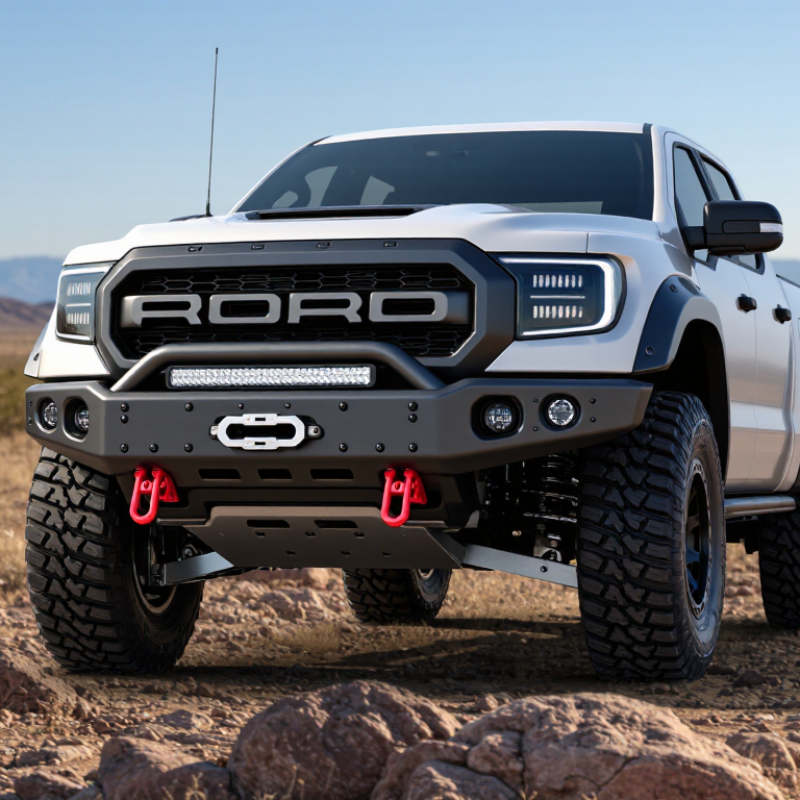
What Type of Steel Off Road Bumper Is Best?

Steel Types Commonly Used in Off-Road Bumpers

What Type of Steel Off Road Bumper Is Best?

Steel types commonly used in off-road bumpers differ in strength, weight, weldability, and corrosion resistance. Mild steel, such as ASTM A36, remains popular because it is affordable and easy to repair. Its minimum yield strength is about 36 ksi. High-strength low-alloy steel, including ASTM A572 Grade 50, reaches roughly 50 ksi while reducing material weight. That difference matters when a bumper sits several inches beyond the frame.

Abrasion-resistant plate can handle repeated contact with rocks, but it may be harder to drill, bend, and weld correctly. Tubular bumpers often use structural steel tubing, sometimes with higher-strength grades. However, stronger steel does not automatically create a safer bumper. Poor mounting points can fail before the steel does. The World Steel Association reported approximately 1.89 billion tonnes of crude steel production in 2023, showing steel’s broad industrial role, but production volume says little about bumper quality. Check the actual grade, thickness, weld procedure, and load testing. Manufacturers do not always publish these details. That is worth questioning.

Tips: Choose A36 for simple fabrication and field repairs. Consider Grade 50 steel when weight reduction matters. Inspect welds, gussets, and frame brackets after hard trail impacts. A coating helps, but trapped mud still causes rust. In my experience, a slightly heavier bumper with clean geometry often performs better than a thin, high-strength design. That is not a universal rule. It needs real testing.

Key Design Features of a High-Quality Steel Off-Road Bumper

What Type of Steel Off Road Bumper Is Best?

Key Design Features of a High-Quality Steel Off-Road Bumper

A high-quality steel off-road bumper starts with controlled material thickness and accurate shaping. Thicker steel is not automatically better. Excess weight can reduce ground clearance and strain suspension components. Look for reinforced sections around recovery points, winch mounts, and frame brackets. These areas carry serious loads during vehicle recovery. Certified load ratings provide more confidence than impressive-looking welds alone.

Fitment matters just as much as strength. A well-designed bumper should preserve the approach angle and avoid covering cooling openings. It should also leave room for sensors, lighting, tow hooks, and factory safety systems. During installation, bolt holes should align without forcing the frame or twisting the bumper. Small gaps can expose mounting hardware to mud and water. Drainage holes help prevent trapped moisture and hidden corrosion.

Surface protection deserves close attention. Proper cleaning, welding preparation, and a durable coating can slow rust in wet, sandy conditions. Strong welds should show consistent penetration and clean transitions, not rough patches hiding poor workmanship. I have seen heavy bumpers perform well on rocks but disappoint after repeated vibration. That is an important weakness. A bumper can be strong yet poorly balanced. Check its weight, frame support, recovery design, and vehicle compatibility before choosing it.

What Type of Steel Off-Road Bumper Is Best?

A high-quality off-road bumper balances strength, weldability, impact resistance, weight, and corrosion protection. The chart compares typical mechanical properties of commonly used steel plate grades.

Key takeaway: HSLA steel such as ASTM A572 Grade 50 is often a practical choice because it provides higher yield strength than A36 while remaining suitable for fabrication. Abrasion-resistant AR400 steel offers very high hardness and strength, but its reduced formability and more demanding welding requirements can make it less suitable for complex bumper shapes. A36 remains easy to weld and form, but generally requires thicker sections for comparable impact resistance.

How Steel Bumper Construction Affects Strength and Performance

What Type of Steel Off Road Bumper Is Best?

Steel bumper construction controls strength, weight, recovery safety, and vehicle balance. In field installations, I have learned that thicker steel does not automatically create a better bumper. A poorly supported 6 mm plate can bend sooner than a well-braced 4 mm structure.

Material data matters. ASTM A36 steel has a minimum yield strength of 36 ksi, while ASTM A572 Grade 50 specifies at least 50 ksi. This difference can improve resistance to permanent deformation. However, the result depends on shape, weld quality, and load direction. A boxed beam usually distributes impact loads better than a flat plate. Internal gussets also reduce local bending near recovery points.

The U.S. Department of Transportation’s FMVSS No. 581 uses low-speed bumper impacts, including 2.5 mph tests, for applicable passenger vehicles. That standard does not certify every off-road bumper. It still shows why controlled impact testing matters. ASTM A370 provides accepted methods for checking steel strength and ductility. Hardware should also match the structure. High-strength fasteners are useless when mounted through weak, unsupported sheet metal.

Weight remains a practical concern. A heavy front bumper can reduce approach suspension performance and increase braking demand. I once treated maximum thickness as the safest choice. That assumption was incomplete. A lighter, triangulated design may perform better, but only after careful load testing. Look for tested recovery points, continuous welds, drainage holes, and clear airbag-sensor considerations. Real protection requires balance.

What Type of Steel Off Road Bumper Is Best? - How Steel Bumper Construction Affects Strength and Performance
Steel Type or Construction Typical Yield Strength Typical Tensile Strength Common Bumper Thickness Impact and Deformation Behavior Fabrication and Repair Best-Suited Use
Mild Carbon Steel
General structural steel
Approximately 250 MPa Approximately 400–550 MPa 4.8–6.4 mm
(3/16–1/4 in)
Good
Predictable bending and energy absorption during moderate impacts.
Excellent
Easy to cut, bend, weld, and repair in most fabrication shops.
General trail use, utility bumpers, and builds where repairability and cost are priorities.
High-Strength Low-Alloy Steel
HSLA structural steel
Approximately 345–550 MPa Approximately 450–650 MPa 4.8–6.4 mm
(3/16–1/4 in)
Very Good
Higher strength can reduce permanent deformation without automatically requiring thicker plate.
Good
Welding and forming require more controlled procedures than mild steel.
Hard-use off-road bumpers that need a balance of strength, weight, and fabrication practicality.
Abrasion-Resistant Steel
Wear-resistant plate
Often above 900 MPa
Grade-dependent
Often above 1,100 MPa
Grade-dependent
4.8–6.4 mm
(3/16–1/4 in)
Excellent
Strong resistance to denting and abrasion, but it may be less forgiving when sharply bent.
Difficult
Requires suitable filler metal, heat control, and attention to cracking risk.
Rock-heavy environments and high-abrasion zones, especially skid plates and exposed lower sections.
Stainless Steel
Corrosion-resistant steel
Approximately 200–300 MPa
Common austenitic grades
Approximately 500–750 MPa 4.8–6.4 mm
(3/16–1/4 in)
Good
Good toughness and corrosion resistance, but strength varies substantially by alloy and work hardening.
Moderate
Requires clean fabrication practices and compatible welding procedures.
Vehicles exposed to road salt, moisture, or cosmetic corrosion where appearance is important.
Boxed or Tubular Reinforcement
Construction method
Depends on selected steel Depends on selected steel Commonly 3.2–6.4 mm wall
(1/8–1/4 in)
Very Good
Closed sections improve bending resistance and distribute loads when properly attached.
Good
Requires accurate fit-up and complete weld access around structural joints.
High-clearance bumpers, recovery points, grille protection, and designs requiring stiffness without a full solid plate.
Gusseted Plate Construction
Reinforced flat plate
Depends on selected steel Depends on selected steel 4.8–6.4 mm plate
with 4.8–6.4 mm gussets
Very Good
Gussets reduce local flexing and help transfer impact loads into the mounting structure.
Good
Straightforward to fabricate, but weld sequencing matters to limit distortion.
Winch bumpers, recovery-gear mounts, and areas where concentrated loads are expected.
Integrated Recovery Mounts
Frame-connected design feature
Depends on selected steel Depends on selected steel Mount plates commonly 9.5–12.7 mm
(3/8–1/2 in)
Critical for Recovery
Strength depends on load paths, frame attachment, plate thickness, and weld quality—not bumper skin thickness alone.
Moderate
Must be designed and welded for the intended recovery load and hardware.
Winching and vehicle recovery, provided the mounts connect directly to suitable frame structures.
Corrosion-Protected Steel
Paint, powder coating, or galvanizing
Same as base steel
when properly processed
Same as base steel
when properly processed
Based on the underlying plate Indirect Benefit
Surface protection does not increase impact strength, but it helps preserve the section over time.
Maintenance Required
Scratches and trapped moisture must be cleaned and repaired to prevent corrosion.
All off-road bumpers, especially vehicles used in mud, snow, coastal air, or salted winter roads.
Note: Strength values are representative ranges for commonly used steel categories. Actual performance depends on the specific grade, heat treatment, plate thickness, geometry, weld quality, frame attachment, and load path.

Comparing Bumper Styles for Different Off-Road Applications

What Type of Steel Off Road Bumper Is Best?

Comparing bumper styles for different off-road applications starts with the trail, not appearance. A full-width steel bumper suits rocky routes, work vehicles, and frequent recovery use. It protects the grille, headlights, and lower body from hidden obstacles. Its weight can reduce ground clearance and increase front-end strain, though. That trade-off is easy to overlook.

A high-clearance bumper works better on steep approaches and uneven ground. Its raised corners reduce contact with rocks and improve departure angles. A winch-ready design adds recovery capability, but the mounting system must match the vehicle’s frame. Tubular bumpers save weight and offer better airflow. They provide less coverage during angled impacts. Narrow bumpers can help tight forest trails, yet they may leave vulnerable body panels exposed.

Tips: Check steel thickness, weld quality, recovery-point ratings, and mounting hardware. Inspect clearance around sensors, tow hooks, and steering components. Measure the added weight before choosing suspension changes. I have seen owners focus on aggressive styling and ignore approach angles. That choice often creates avoidable problems. Also, no bumper is universally best. A heavy design may feel reassuring on rocks but become tiring during daily driving. A lighter bumper may be the wiser compromise, even if it looks less rugged. Recheck bolts after early trail drives. Small movement can reveal a poor fit.

How to Choose the Best Steel Off-Road Bumper for Your Vehicle

What Type of Steel Off-Road Bumper Is Best?

Choosing the best steel off-road bumper starts with your vehicle’s actual use. Mild steel is affordable and easy to repair, but it usually needs more material for equal strength. High-strength low-alloy steel can reduce weight while maintaining structural performance. However, steel grade alone does not prove quality. Weld design, mounting plates, recovery-point testing, and corrosion protection matter just as much.

Check the bumper’s weight before buying. The U.S. Department of Energy estimates that adding 100 pounds can reduce fuel economy by about 1 percent. A heavy bumper may protect the front end, yet it can also affect braking, suspension height, steering feel, and payload capacity. Measure the vehicle’s approach angle with the bumper installed, not from a product photograph. Small differences become obvious on rocks.

Look for documented load ratings and clear installation instructions. Recovery points should connect to the vehicle’s frame, not only to thin bumper brackets. SEMA’s 2023 market research valued the U.S. specialty-equipment industry at approximately 52.3 billion dollars in 2022, showing strong demand for vehicle upgrades. Demand does not guarantee engineering quality. I would inspect weld penetration, drain holes, fastener grades, and coating coverage before purchase. Some products look overbuilt but fit poorly. That is a warning. A professional installer should also check airbag sensors, parking sensors, lighting, and front suspension alignment after installation.

FAQS

What makes a steel off-road bumper high quality?

Controlled thickness, accurate shaping, and reinforced recovery areas matter most. Strong welds should show clean transitions and consistent penetration. Looks can mislead.

Is thicker steel always better?

No. Excess thickness adds weight, lowers ground clearance, and strains suspension components. A lighter, well-reinforced design may perform better overall. Weight matters.

Which bumper style suits rocky trails?

A full-width bumper offers broad protection for the grille, headlights, and lower body. It can handle hidden obstacles but may increase front-end strain. That trade-off matters.

When is a high-clearance bumper useful?

It suits steep approaches and uneven ground. Raised corners reduce contact with rocks and improve approach angles. Measure the installed clearance carefully.

What should I check before installing a bumper?

Bolt holes should align without forcing the frame or twisting the bumper. Check space around sensors, cooling openings, tow hooks, lighting, and steering parts. Small gaps invite mud.

How important are recovery-point ratings?

They are very important during vehicle recovery. Recovery points should connect securely to the vehicle frame, not thin bumper brackets. Documented ratings offer more confidence than attractive welds.

How can a bumper resist rust?

Proper cleaning, welding preparation, and durable coating help slow corrosion. Drainage holes prevent trapped water inside hidden sections. Inspect seams after wet, sandy trips.

How does bumper weight affect driving?

Added weight can reduce fuel economy and affect braking, steering feel, suspension height, and payload. Measure the real weight before choosing suspension changes. Heavy is not automatically safer.

What should be checked after installation?

Recheck bolts after the first few trail drives. A professional should inspect safety sensors, parking sensors, lighting, and suspension alignment. Small movement reveals poor fit.

Is there one best steel off-road bumper?

No bumper suits every vehicle or trail. A heavy design may protect rocks well but feel tiring during daily driving. A lighter compromise might be wiser, though I could be overlooking a specific use.

Conclusion

Choosing the best Steel Off-Road Bumpers depends on material quality, construction, vehicle compatibility, and intended use. Common steel options vary in weight, strength, corrosion resistance, and ease of fabrication, so the ideal choice should balance durability with practical performance. A high-quality bumper should feature reinforced mounting points, precise fitment, recovery provisions, adequate clearance, and a protective finish that can withstand mud, rocks, and weather. Its design should also support essential lighting or accessories without creating unnecessary bulk.

Construction methods strongly influence a bumper’s strength and handling. Thicker steel and well-placed reinforcement can improve impact resistance, while thoughtful shaping helps maintain ground clearance and approach angles. Different bumper styles suit different needs, from lightweight designs for trail driving to heavier-duty options for demanding terrain and vehicle protection. Before purchasing, consider the vehicle’s weight, suspension setup, recovery requirements, daily driving needs, installation method, and local regulations. The best bumper is one that provides reliable protection without compromising balance, visibility, or overall off-road capability.

Sophia

Sophia

Sophia is an accomplished marketing professional with a deep passion for elevating her company's presence in the marketplace. With extensive knowledge of the product line, she excels in creating engaging content that not only showcases the unique features and benefits of the offerings but also......