Choosing among the best Gooseneck Trailer Hitches in 2026 starts with the truck, not the product label. A hitch must suit the truck’s mounting system and rated towing limits. It must also match the trailer’s loaded weight and kingpin dimensions. A polished finish cannot compensate for a poor fit.
The scale of towing-related demand is hard to measure directly. The RV Industry Association reported 333,733 RV shipments in 2024, but that figure is not a measure of gooseneck hitch sales. Gooseneck trailers serve distinct farm, horse, and commercial uses. The comparison here therefore focuses on verifiable specifications, installation requirements, durability, and day-to-day usability—not broad market-size claims. Small details matter.
Towing specialist Andy Thomson’s practical guidance can be summarized this way: match the tow vehicle and trailer as a complete system. That is a paraphrase, not a direct quotation. For buyers, the useful test is concrete: check the hitch rating, confirm the truck’s limits, and inspect how the ball, safety-chain anchors, and release handle work together. SAE J2807 provides a standardized method for evaluating vehicle tow ratings; it does not certify every hitch-and-trailer combination. We’ll compare leading options with that distinction in mind. Even then, installation quality can change the result, and no shortlist replaces checking the manufacturer’s current fitment instructions.
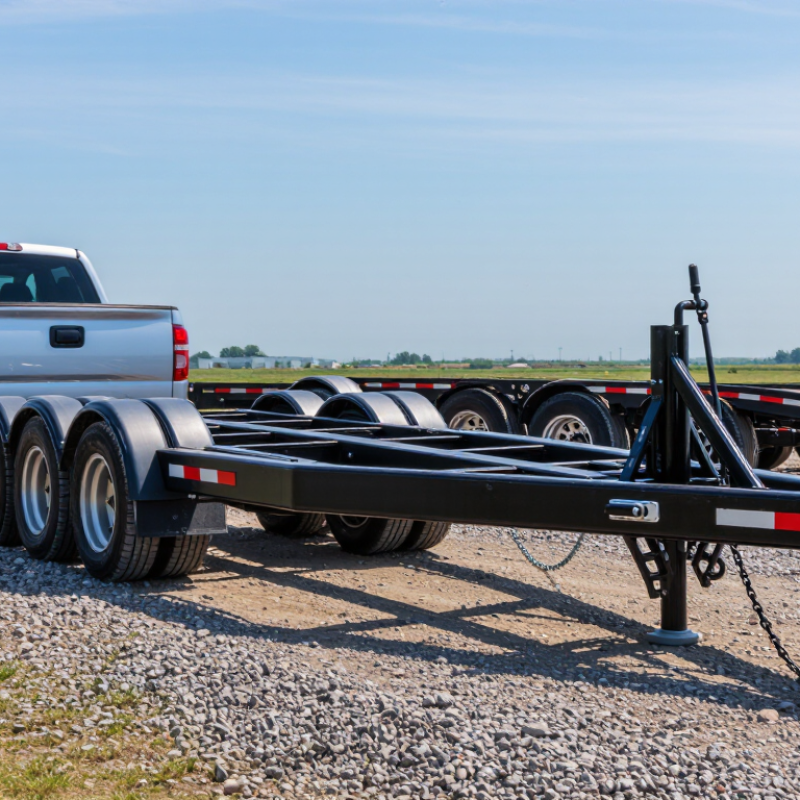
What Is a Gooseneck Trailer Hitch and How Does It Work?
A gooseneck hitch connects a trailer to a ball mounted through the truck bed, usually above or slightly ahead of the rear axle. The trailer’s coupler lowers over the ball, then a locking mechanism secures it. This arrangement lets the trailer pivot during turns while transferring part of its load to the truck. The hitch may look simple. Its fit and rated capacity matter.
That vertical load is called pin weight. Check the truck’s payload rating, hitch rating, and trailer limits together; the lowest limit governs. A crowded truck bed can also reduce clearance between the trailer and cab. Before towing, inspect the coupler lock, safety chains, electrical plug, and nearby cargo. A quick glance is not a full inspection.
SAE J2638 sets performance requirements for fifth-wheel and gooseneck trailer couplings, offering a technical benchmark beyond appearance. For broader context, the RV Industry Association’s 2024 year-end shipment report recorded 333,595 RV shipments in the United States. That figure covers the RV market, not gooseneck hitches specifically, but it shows the scale of recreational towing. One easy-to-miss detail: a hitch can be correctly installed yet still be unsuitable for a particular truck-and-trailer combination. Check the vehicle and hitch manuals, and verify ratings before loading.
What Are the Best Gooseneck Trailer Hitches in 2026? — What Is a Gooseneck Trailer Hitch and How Does It Work?
A gooseneck hitch connects a trailer to a coupling point mounted in a pickup truck’s bed, typically over or near the rear axle. The trailer’s coupler fits over a hitch ball, allowing the combination to articulate as it travels. The most suitable hitch depends on the truck, trailer, intended use, and verified weight ratings.
| Hitch Style | How It Works | Best Suited For | Advantages | Things to Check |
|---|---|---|---|---|
| Under-bed hitch with removable ball | The main hitch structure is installed beneath the truck bed. The ball can be removed when it is not needed. | Owners who tow regularly but also want a mostly clear truck bed between trips. | Leaves the bed surface largely unobstructed when the ball is removed; provides a dedicated gooseneck connection. | Confirm that the hitch is approved for the truck’s year, make, model, bed length, and frame configuration. Check how the ball is stored when removed. |
| Under-bed hitch with folding ball | The hitch ball folds or pivots below the bed surface when not in use and is raised into position for towing. | Drivers who want quick access to a clear bed without removing and storing a separate ball. | Convenient bed clearance when stowed; the ball remains with the vehicle. | Verify the specific truck fit and follow the manufacturer’s instructions for locking, operation, inspection, and maintenance. |
| Above-bed rail-mounted hitch | A hitch or adapter attaches to rails installed across the truck bed, positioning the gooseneck coupling above the bed floor. | Some trucks already equipped with compatible rails, or applications where an above-bed setup is appropriate. | Can provide a removable or adaptable arrangement, depending on the system. | Check rail, adapter, hitch, and truck ratings together. The rails and mounting points must be approved for the intended combination. |
| Gooseneck ball used with a compatible fifth-wheel prep system | A purpose-designed ball or adapter fits into factory-installed mounting points in a truck bed prepared for compatible towing equipment. | Trucks equipped with a matching factory prep package. | Uses the truck’s intended mounting locations and can allow the bed to be cleared when the equipment is removed. | Confirm that the ball or adapter is specifically compatible with the prep system and that the truck and trailer ratings permit the planned load. |
| Fixed gooseneck ball | The ball remains installed at the truck-bed coupling point. | Dedicated tow vehicles that rarely need an unobstructed bed. | Simple access to the coupling point and no separate ball to store. | Consider bed clearance and cargo needs. Inspect the ball, mounting structure, fasteners, and surrounding bed area as directed. |
How to choose: Start with the truck and trailer owner’s manuals, then verify compatibility and ratings for every part of the towing combination. Do not treat a hitch’s advertised rating as the permitted rating for the whole setup: the truck, hitch, trailer, tires, and other components each have limits. Follow the lowest applicable limit, observe payload and axle limits, and have installation performed according to the hitch instructions.
FAQS
Common designs include above-bed, under-bed, folding-ball, and factory-integrated hitches. Each suits different trucks and cargo needs.
Under-bed systems hide most hardware beneath the bed. Removing the ball leaves more room for plywood sheets or bulky cargo.
Rails or mounting plates are easier to inspect, but they occupy cargo space. That can be awkward with flat materials.
Compare the hitch rating with the trailer’s loaded weight, not its empty weight. The truck’s towing and payload limits also matter.
Confirm the truck’s model year, bed type, frame clearance, wiring, and spare-tire access. Small details matter.
Check the ball and latch for smooth movement. Gritty movement, excess play, or corrosion deserves closer inspection.
A removable ball and visible latch indicator can help. Access from beside the tailgate is useful when the trailer blocks your view.
Incorrect fit or fastener torque can affect the setup. Have a qualified installer verify both, then follow the recommended recheck interval.
They free up bed space, but add steps before towing. It can still feel awkward when alignment needs a second person.
Conclusion
Gooseneck Trailer Hitches connect a trailer to a ball mounted in a truck bed, positioning the load over or near the rear axle for a secure towing setup. When comparing options in 2026, consider towing capacity, compatibility with your truck and trailer, installation requirements, ease of use, durability, and whether the hitch allows the truck bed to remain usable when the hitch is removed or stored.
Available designs include fixed, removable, folding, and under-bed systems, each offering different trade-offs in convenience, clearance, and storage. The best choice depends on the trailer’s coupler and loaded weight, your truck’s configuration and towing limits, and how often you tow. Compare hitch styles by fit, practical features, and maintenance needs, then verify that the complete truck-and-trailer setup is properly matched before making a decision.