0%

Choosing the best Commercial Van Shelving Systems in 2026 starts with the work your van actually does. A plumber carrying fittings needs different storage from a delivery team handling bulky cartons. The right setup keeps frequently used tools within reach, protects fragile items, and leaves enough floor space for the day’s load.

Small details matter. Check the shelving dimensions against your van’s make, model, and wheelbase. Compare materials, mounting methods, drawer access, and published load ratings. A steel unit may suit heavy equipment, while aluminum can help reduce added weight. Verify specifications with the manufacturer, and have installation checked by a qualified professional when needed. Fit matters.

This guide compares practical options by durability, storage flexibility, safety features, and overall value—not by appearance alone. It also considers how shelves affect daily routines: Can you find a socket without unloading three boxes? Do doors clear the unit? Does the layout still work when your inventory changes? Those questions are easy to overlook.

No single system suits every trade. A premium setup may be wasted in a lightly used van, while a low-cost unit may disappoint under daily heavy use. Be cautious of broad claims that promise a perfect fit for every vehicle. Details count. The best choice is the one that matches your real cargo, verified vehicle measurements, and budget, with room to revise the plan if your work changes.
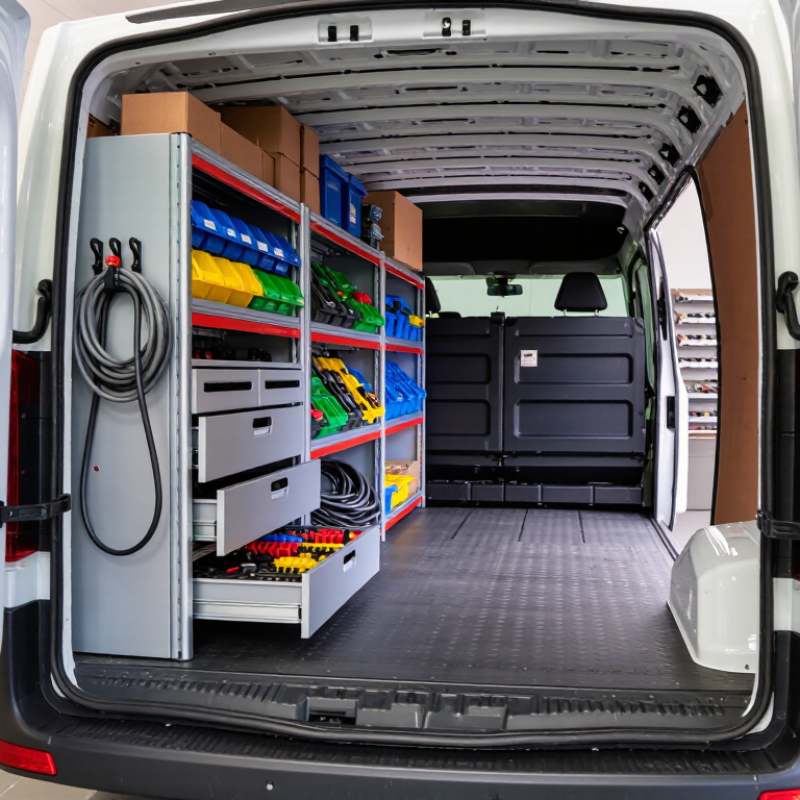
What Are the Best Commercial Van Shelving Systems in 2026?

What Commercial Van Shelving Systems Do and How They Work

Commercial van shelving systems convert open cargo space into organized storage for tools, parts, and supplies. A typical setup uses metal shelves, drawers, bins, and dividers secured to the vehicle’s interior structure. The shelves keep equipment off the floor and make frequently used items easier to reach. Small parts wander. Labeled bins and shallow drawers can help keep them in place.

During a workday, technicians usually arrange heavier equipment low and near the van’s center, while lighter items sit higher. This can reduce top-heavy loading and make access simpler. Tie-down points, edge lips, and retaining straps help limit movement when the vehicle turns or stops. They do not make careless loading safe. Installers should follow the shelving maker’s instructions and check the vehicle’s payload limit before adding equipment.

A useful system fits both the van’s dimensions and the worker’s routine. Measure door openings, wheel-well clearance, and roof height before choosing shelf depth. Leave a clear path to essential tools; an extra shelf can look efficient but create awkward reaching. Fasteners should match the mounting points, and loaded shelves need periodic inspection for looseness or wear. No layout stays perfect forever. Work habits change, and a small adjustment may improve access more than adding another cabinet.

Which Factors Determine a Shelving System’s Performance

What Are the Best Commercial Van Shelving Systems in 2026?

A shelving system performs well when it fits the van, the work, and the people using it. Check the vehicle’s payload before choosing materials or adding drawers. Shelving, tools, and daily cargo all count toward the total load. A sturdy setup can still be a poor choice if it leaves too little capacity for equipment.

Fit matters. Measure the cargo area around wheel arches, door openings, and interior roof curves. Then check that shelves can be securely mounted to suitable structural points. Poorly placed fixings may loosen under repeated road vibration. Adjustable shelves help accommodate changing tools, but frequent adjustments can create rattles if components do not lock firmly.

Access is just as important as capacity. A technician who reaches for fasteners all day may benefit from shallow bins near the side door, while bulky equipment needs clear, supported storage. Small details count. Rounded edges, labels, and dividers can reduce snags and search time. Consider corrosion-resistant finishes if wet gear is common, and listen for noise during a short test drive. There is no perfect layout; even a carefully planned system may need small changes after a week of real use.

What Are the Best Commercial Van Shelving Systems in 2026? — Which Factors Determine a Shelving System’s Performance

The best setup depends on the vehicle, cargo, work routine, and required payload. Compare systems by these practical performance factors rather than by appearance alone.

Performance Factor Why It Matters What to Check Practical Performance Indicator Common Trade-Off
Payload and shelf load rating Shelving adds weight and carries tools or materials, reducing the vehicle’s remaining payload. Overloading shelves or the vehicle can compromise safe operation. Check the vehicle’s payload limit and the system’s stated load rating. Confirm whether ratings apply per shelf, per bay, or to the complete assembly. The loaded vehicle and each shelf remain within their respective manufacturer-rated limits. Higher-capacity construction may add weight and reduce available payload.
Weight of the system Every kilogram of installed equipment uses part of the vehicle’s payload allowance and may affect operating costs. Compare the weight of the complete planned installation, including drawers, dividers, mounting hardware, and accessories. Low installed weight while still meeting load, durability, and safety requirements. Lightweight materials can cost more or require careful design to achieve the needed strength.
Vehicle fit and usable space Correctly fitted shelving preserves access to doors and service areas while making the cargo space easier to use. Measure the interior, wheel arches, door openings, roof height, and any obstructions. Check compatibility with the exact vehicle configuration. Secure fit with useful access to doors, cargo, and required vehicle equipment. A close-fitting layout can be less adaptable if the vehicle or work requirements change.
Mounting and securement Secure attachment helps prevent the shelving and its contents from shifting during braking, turning, or a collision. Review the specified mounting points, fasteners, installation instructions, and any vehicle-specific requirements. Installation follows the vehicle and shelving-system instructions, with loads restrained appropriately. More secure installations may take longer and can require professional fitting.
Organization and access Clear organization can reduce time spent searching for tools and help keep frequently used items within reach. Assess shelf spacing, bins, drawers, dividers, labels, and access to items from the side and rear doors. Frequently used items are easy to identify and retrieve without unloading unrelated equipment. More drawers and compartments add weight, cost, and installation complexity.
Durability and corrosion resistance Materials and finishes affect how well the system handles vibration, abrasion, moisture, and demanding daily use. Consider the working environment, material, finish, joints, moving parts, and care or maintenance instructions. Components remain functional and secure under the expected work conditions when maintained as directed. More durable materials or protective finishes may increase initial cost.
Modularity and reconfiguration Adjustable components make it easier to accommodate changing tools, jobs, or vehicle needs. Check whether shelves, dividers, bins, and accessories can be repositioned or removed without replacing the whole system. The layout can be adapted to realistic changes in equipment and workflow. Highly configurable systems may need more planning and can have additional parts to manage.
Noise and vibration control Loose fittings, rattling contents, and vibration can distract drivers and contribute to wear. Look for secure fastenings, suitable shelf liners or retainers, and ways to restrain tools and containers. Shelves and stored items stay securely in place during normal vehicle use. Additional liners, restraints, and fittings add cost and may need periodic inspection.
Installation and maintenance Installation quality affects fit and security; accessible components make inspection and upkeep easier. Review installation requirements, service access, replacement parts, cleaning needs, and instructions for checking fasteners. The system can be installed correctly and inspected or maintained as recommended. Complex layouts may take longer to install and maintain.
Total cost of ownership The purchase price is only one part of the cost; installation, accessories, repairs, and future changes can also matter. Compare the complete installed setup and account for likely accessories, upkeep, and reconfiguration needs. The system meets operational needs at a cost that fits the expected period of use. A lower upfront price may not include the accessories or installation needed for the intended setup.

Note: Load limits, vehicle payload, and installation requirements vary by vehicle and system. Use the applicable manufacturer documentation and vehicle specifications; do not treat general comparisons as a substitute for rated limits.

What Types of Van Shelving Systems Are Available in 2026

Commercial van shelving in 2026 comes in several practical formats, from open shelves to enclosed cabinets. Open shelving keeps frequently used tools visible and easy to reach. Adjustable shelves let technicians change spacing for cases, spray bottles, or stacked parts. Simple, but exposed. Small items can slide around unless bins or retaining lips keep them in place.

Drawer units suit sockets, fittings, and other small components that disappear on deep shelves. Lockable cabinets offer more protection for delicate equipment, while modular systems combine shelves, drawers, and bins in one layout. Lightweight aluminum structures can help limit added vehicle weight; steel options often feel sturdier but may weigh more. Wheel-arch units use otherwise awkward space, though their shape can restrict storage.

The right mix depends on daily tasks, cargo, and how often the van gets reorganized. A delivery setup may benefit from wide shelves, while mobile repair work often needs drawers and clear work surfaces. Measure the interior, door openings, and wheel arches before choosing components. Check load ratings and vehicle-specific mounting points, then secure every unit properly. A layout can look neat on paper and still feel awkward when a drawer hits a door or a long tool will not fit. That happens.

How Leading Commercial Van Shelving Systems Compare

Commercial van shelving systems differ most in weight, adjustability, and how securely they hold tools on rough roads. Steel units often suit heavy equipment and frequent use, but their added mass can reduce available payload. Aluminum systems are lighter and resist corrosion, though thin components may flex under concentrated loads. Composite shelves can limit rattling and surface wear, but their capacity depends on construction and mounting.

The right layout matters as much as the material. Open shelves make bins and small parts easy to reach; drawers keep loose items contained but add weight and take time to organize. Adjustable dividers help when stock changes, while fixed compartments can feel cramped after a few months. Measure the cargo area, door openings, and wheel-well space before comparing configurations. Leave room for bulky items. Check that installation points attach to suitable vehicle structure, and confirm the system’s stated load limits. A tidy layout looks convincing in a showroom. Daily access is the real test. Even a well-built system can disappoint if frequently used tools sit behind rarely used supplies.

Commercial Van Shelving in 2026: Material Density Comparison

Material density is one factor in a shelving system’s weight. Aluminum is much less dense than steel, while plywood and HDPE are also lightweight options. These approximate material densities do not indicate a system’s load capacity, durability, or overall suitability; those depend on the design and specifications.

How to Choose a Shelving System for Your Van and Work Needs

Choose van shelving around the work, not the catalog. List the tools, parts, and consumables you carry on a typical day. Measure the van’s usable width, door openings, and wheel-well clearance before choosing shelf depth. Then check the combined weight of shelving and cargo against the vehicle’s payload and axle limits.

BLS reported 4.4 recordable injury and illness cases per 100 full-time workers in transportation and warehousing in 2023. That figure is not specific to van shelving, but it highlights why safe access and secure storage deserve attention. Put frequently used items near the doors, and keep heavier tools low to reduce awkward reaching. Adjustable shelves suit changing loads; drawers and bins help keep small fittings from rolling underfoot. Steel can handle demanding use, while lighter materials may preserve more payload. Neither choice is automatically best.

Tips: Load the van as you actually work. Measure twice. Keep heavy items low. Secure drawers and loose equipment, then check that doors still open freely. A neat layout can still be frustrating if a ladder or bulky case blocks the aisle.

FAQS

What does a commercial van shelving system do?

It organizes tools, parts, and supplies inside open cargo space. Shelves, drawers, bins, and dividers keep items easier to find. Small parts still wander.

How should I choose shelves that fit my van?

Measure the cargo area, door openings, wheel arches, and roof height. Check clearances before choosing shelf depth. Measure twice.

How much weight can the shelving hold?

Check the van’s payload limit before adding shelves, tools, and daily cargo. All of them count toward the total load. A sturdy system can still leave too little capacity.

Where should heavy tools go?

Keep heavier equipment low and near the van’s center. Lighter items can sit higher. This may reduce top-heavy loading and make access simpler.

How can I stop stored items from shifting?

Tie-down points, edge lips, and retaining straps can limit movement during turns and stops. They are not a substitute for careful loading.

What makes shelves easier to use during a workday?

Put frequently used tools within easy reach. Shallow bins near a side door can suit small fasteners, while bulky gear needs supported storage. Extra shelves can create awkward reaches.

How do I know whether the shelving is securely installed?

Use fasteners suited to the van’s structural mounting points. Follow the installation instructions, then check loaded shelves for looseness or wear. Listen for rattles on a short drive.

Should a shelving layout stay the same over time?

Not necessarily. Work habits and equipment change, so adjust shelves when access becomes awkward. A small change may help more than another cabinet. It can take a week to notice what feels wrong.

Conclusion

Commercial Van Shelving Systems help turn a vehicle into an organized, efficient workspace by keeping tools, parts, and supplies secure and easy to reach. Their performance depends on factors such as load capacity, materials, layout, adjustability, installation, and how well the system fits the van’s interior. A well-planned setup can reduce clutter, make better use of available space, and support a smoother daily workflow.

In 2026, options include fixed shelves, modular units, drawer-based storage, and adjustable configurations, each suited to different equipment and work routines. Comparing systems means looking beyond storage space to consider durability, accessibility, weight, flexibility, and compatibility with the vehicle. The best choice is the one that matches the van’s dimensions, the types of items carried, and the demands of the job while leaving a practical, safe workspace.

Sophia

Sophia

Sophia is an accomplished marketing professional with a deep passion for elevating her company's presence in the marketplace. With extensive knowledge of the product line, she excels in creating engaging content that not only showcases the unique features and benefits of the offerings but also......