0%

Choosing the right Commercial Truck Ladder Racks can make a workday smoother—or add problems to an already crowded truck. A rack needs to carry ladders securely, suit the vehicle, and hold up to regular use. It should also leave room for tools and allow practical access to the bed. Small details matter. A few inches of added height can affect clearance in a garage or loading bay.

This guide looks at the features that separate useful options from poor fits. We consider rated capacity, mounting style, materials, adjustability, and ladder-retention systems. A steel rack may offer sturdy construction, while aluminum can reduce added vehicle weight. Neither material is automatically best for every crew. Check the rack maker’s load rating and the truck manufacturer’s guidance before choosing or loading equipment. Fit matters, too: cab shape, bed length, and existing accessories can limit compatibility.

There is no perfect rack for every job. That is easy to forget when product photos make each model look simple. A contractor carrying long extension ladders may value adjustable crossbars and secure tie-down points. A service team with lighter loads may care more about quick access and easy installation. We’ll compare common rack types and explain what to inspect before buying, including fit, finish, and everyday handling. The aim is practical guidance, not a universal winner. A rack that works well on one truck may be awkward on another.
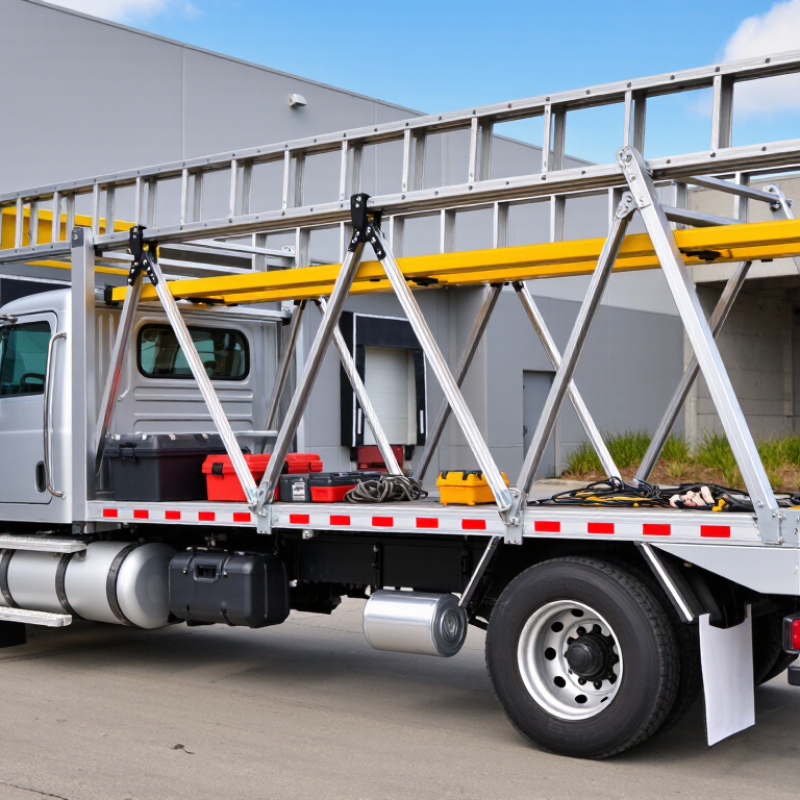
What Are the Best Commercial Truck Ladder Racks?

How Commercial Truck Ladder Racks Support and Secure Long Loads

What Are the Best Commercial Truck Ladder Racks?

A commercial truck ladder rack supports long loads by spreading their weight across sturdy contact points above the bed. With two or more crossbars, ladders, conduit, or trim can sit clear of the cab and tailgate. That space helps protect painted surfaces and leaves the bed available for tools. But a rack only works well when its rated capacity matches the cargo and vehicle. Check both manuals; limits may differ for stationary and moving loads. Keep items balanced across the supports, with no heavy end hanging far beyond a crossbar. A slight imbalance can feel significant during braking or on rough pavement. The rack is not magic.

Tips: Use compatible straps at multiple points, and snug them without crushing delicate materials. Add padding where loads touch metal. Before driving, tug each strap and check that nothing can slide sideways. Recheck after a short distance; straps can loosen as cargo settles.

It is easy to focus on securing the load and forget to inspect the rack itself. Look for loose fasteners, cracked welds, bent bars, or corrosion, especially after carrying heavy materials. Make sure the load does not block lights or the driver’s view. If it flexes or shifts, stop and adjust it. A tidy setup can still be unsafe when the load is too long, poorly balanced, or beyond the rack’s rating.

Rack Designs Compared: Over-Cab, Side-Mount, and Utility-Body Systems

Commercial truck ladder racks work best when their layout matches the truck’s body and daily loading routine. An over-cab rack carries long ladders above the cab and bed, leaving floor space open for tools or materials. Check cab clearance, ladder length, and overhead obstacles before choosing one. A tall load can catch wind, and awkward loading may become tiring over a long shift.

Side-mount systems keep ladders along the body, where they can be reached without climbing into the bed. They suit crews that handle ladders often, but mounting position matters. Doors, tool compartments, and wheel clearance can limit access. Measure with doors open, not just against a parked truck. Small oversight, big annoyance.

Utility-body systems can pair rack supports with compartment layouts, keeping equipment organized and separating ladders from smaller tools. Their strength depends on proper mounting points and the body’s rated capacity, so verify specifications before adding a load. Consider how weight is distributed, too; a rack should not become an excuse to overload the vehicle. There is no universal winner. A quick trial with the actual ladder, gloves, and work gear can reveal reach problems that a product diagram misses. The first choice may still need adjusting.

Indicative design-fit ratings from 1 (lower) to 5 (higher), based on general system characteristics—not certified load ratings. Actual capacity, fit, and installation requirements depend on the specific rack, vehicle, mounting points, and manufacturer specifications.

Steel vs. Aluminum Racks: Compare Weight, Corrosion Resistance, and Capacity

What Are the Best Commercial Truck Ladder Racks?

Steel and aluminum racks trade strength, weight, and upkeep. The Aluminum Association lists aluminum’s density at about 2.7 g/cm³; ASM Handbook data puts common steel near 7.85 g/cm³. For comparable solid volume, aluminum weighs roughly one-third as much. On a work truck, that can mean easier handling during installation and less rack weight above the cab. Still, tubing size, joints, and mounting points change the finished rack’s weight and performance.

Steel can suit heavy, frequent use when its rated capacity matches the load. Its extra weight may be a drawback for crews who remove racks often. Aluminum naturally forms a protective oxide layer, while painted or coated steel can need touch-ups where tools scrape the finish. Neither material is maintenance-free. Capacity depends on the complete rack design and vehicle mounting—not material alone. Check the stated load rating, crossbar spacing, and attachment hardware before hauling long ladders. A rack that looks sturdy may still flex under poorly distributed loads.

Tips: Compare published rack weights and load ratings, not just material names. Check welds, fasteners, and coating condition during routine inspections. One detail is easy to miss: uneven ladder placement can stress one side more than the rating suggests. That deserves a second look.

What Are the Best Commercial Truck Ladder Racks? — Steel vs. Aluminum Racks: Compare Weight, Corrosion Resistance, and Capacity
Comparison Steel Racks Aluminum Racks What to Check Before Buying
Material density About 7.85 g/cm³ for common carbon steel. About 2.70 g/cm³ for common aluminum alloys. These are material densities, not finished rack weights. Tube size, wall thickness, rails, and mounting hardware affect the complete rack’s weight.
Rack weight Often heavier for a comparable design, which can reduce the truck’s remaining payload. Often lighter for a comparable design, leaving more payload available for tools and cargo. Compare the listed weight of complete rack assemblies, including crossbars and mounting hardware—not material density alone.
Corrosion resistance Uncoated carbon steel can rust when exposed to moisture and road salt. Protective coatings help, but damaged coating may need repair. Aluminum naturally forms a protective oxide layer and does not develop red iron rust. It can still corrode, particularly around dissimilar-metal connections or in harsh environments. Look for suitable coatings or finishes, drainage details, and compatible fasteners. Rinse off road salt and inspect joints regularly.
Capacity Can be engineered for high loads, but capacity depends on the rack’s design, material grade, welds, mounting points, and vehicle structure. Can also be engineered for substantial loads; lower material density does not automatically mean lower capacity. Alloy, section design, and connections matter. Use the rack maker’s published load rating. Confirm whether it applies while the vehicle is moving or only when parked, and follow the vehicle’s roof and payload limits.
Stiffness and deflection Steel has a higher elastic modulus—about 200 GPa—so a steel member of the same shape and dimensions generally deflects less under the same load. Aluminum has an elastic modulus of about 69 GPa. Designers can adjust the shape or section size to achieve the required stiffness. Check the rack’s rated load and installation instructions rather than judging stiffness by material alone.
Maintenance Inspect coatings, welds, and cut edges for damage or rust; touch up exposed steel as appropriate. Inspect connections, fasteners, and contact points for wear or corrosion; keep mating surfaces clean and follow the maker’s care guidance. Frequent exposure to rain, coastal air, chemicals, or road salt makes regular inspection especially important.
Best fit A practical option when a robust rack and a lower initial purchase price are priorities, provided its weight and protective finish suit the truck and working conditions. A practical option when reducing rack weight and avoiding red-rust maintenance are priorities, provided its rated capacity and construction meet the job requirements. Choose based on the complete rack’s verified rating, total weight, vehicle compatibility, corrosion protection, and intended loads.

Material properties are approximate values for common steel and aluminum. Rack performance and load ratings vary by design and installation; always follow the rack and vehicle manufacturers’ specifications.

Keep Ratings Distinct: ANSI A14.2 Ladder Types Range from 200 to 300 lb

When comparing commercial truck ladder racks, keep the rack’s capacity separate from the ladder’s duty rating. ANSI A14.2 classifications commonly include Type III at 200 pounds, Type II at 225 pounds, Type I at 250 pounds, and Type IA at 300 pounds. Check the ladder’s label and applicable standard edition, since ratings and product details can vary. These figures describe the ladder’s rated load, not how much a truck rack can carry.

That distinction matters on a busy workday. A worker weighing 190 pounds who carries a 20-pound tool bag already exceeds a 200-pound ladder rating.

Count the person, clothing, and tools together. Then check the rack maker’s stated capacity and the truck’s limits separately. They answer different questions.

A rack’s rating does not upgrade a ladder, and a stronger ladder does not make an overloaded rack safe.

Inspect mounting points for loosened bolts, worn straps, or shifting rails, especially after rough roads. Small movement matters.

It is tempting to focus only on the largest number, but that shortcut can hide the weak link. Compare the exact ladder type, the rack rating, and the load you plan to transport before choosing equipment.

Choose by Fit, Payload, Mounting, and the Rack’s Manufacturer-Rated Capacity

The best commercial truck ladder rack is the one that fits the truck and the work it actually carries. Check the cab style, bed length, rail shape, and any tonneau cover or toolbox before comparing designs. A rack that looks compatible in a photo may block a cover or leave too little room for mounting hardware. Measure carefully. Record the truck’s payload rating, too; passengers, tools, and other cargo all use part of that allowance.

Then compare mounting method and rated capacity. A rail-mounted rack may suit frequent loading, while a clamp-on design can be easier to remove, depending on the bed and installation instructions. Do not treat the rack’s rating as extra payload for the truck. Confirm the rack manufacturer’s stated capacity and limits, and follow its requirements for installation and load placement. Include the ladder’s weight, plus straps or accessories, when estimating the load. Keep long items balanced and secured at multiple points.

Small details matter. Look for accessible tie-down points, clearance above the cab, and hardware that can be inspected without unloading everything. Check fasteners after installation and periodically afterward, especially if the truck travels over rough roads. Capacity numbers can be easy to misread, and I would not assume a higher figure means a safer choice. Fit and installation still need a careful check.

FAQS

What is an over-cab ladder rack best suited for?

It carries long ladders above the cab and bed. Bed floor space stays open. Check overhead clearance and wind exposure.

When does a side-mount rack make sense?

It keeps ladders within reach from the ground. Measure with doors open. Tool compartments and wheel clearance can get in the way.

What should I check before choosing a utility-body rack?

Confirm its mounting points and the body’s rated capacity. Distribute weight carefully. Compartments do not make overloading safe.

Is a steel or aluminum rack better?

Aluminum is much lighter for comparable solid volume. Steel may suit frequent heavy use when its rating matches the load. Neither is maintenance-free.

How can I compare rack capacity properly?

Check the complete rack’s stated load rating, attachment hardware, and crossbar spacing. Material alone tells you little.

Are ladder ratings and rack ratings the same?

No. Ladder ratings describe the ladder’s rated load; rack ratings describe the rack’s capacity. Check both separately.

What do common ANSI A14.2 ladder types indicate?

Common ratings range from Type III at 200 pounds to Type IA at 300 pounds. Check the ladder label and applicable standard edition.

What should I inspect before hauling a ladder?

Look for loose bolts, worn straps, shifting rails, damaged coatings, and uneven loading. Small movement matters.

How can I tell if a rack is comfortable to use?

Try it with the actual ladder, gloves, and work gear. A diagram may miss reach problems. The first choice may need adjusting.

Conclusion

Commercial Truck Ladder Racks help support and secure long materials such as ladders, pipes, and building supplies, keeping them organized and freeing up space in the truck bed. The right design depends on the vehicle and the loads being carried. Over-cab racks extend support above the cab, side-mount systems provide accessible storage along the truck, and utility-body racks can be configured to work with service compartments.

Steel racks are typically heavier and may offer high load capacity, while aluminum models are lighter and resist corrosion. Compare materials alongside the rack’s stated capacity, mounting method, vehicle fit, and the truck’s available payload. Keep ladder ratings separate from rack ratings: ANSI A14.2 ladder types range from 200 to 300 pounds, but that figure does not establish how much a rack can carry. Select a rack using its manufacturer-rated capacity and ensure the combined load stays within the limits of both the rack and the vehicle.

Ethan

Ethan

Ethan is a dedicated marketing professional with a wealth of experience in developing and executing strategies that elevate his company’s products to new heights. With a deep understanding of the market dynamics and consumer behavior, he continually researches and analyzes trends to keep the......